
Reviewed · VIENNA MOZART CONCERTS AND TOURS
Mozarthaus Vienna Admission Ticket
Mozart’s most important Vienna home is not just a plaque on a wall. At Mozarthaus Vienna, you can walk through the apartment where he lived from 1784 to 1787, the period when he wrote The Marriage of Figaro and three of his six Haydn Quartets. The museum also connects his music to his friendships, working life, and place in Vienna society.
I like the three-floor layout, which lets you move from Mozart’s personal life to his musical circle and then into the apartment itself. I also like the audio guide, available in 13 languages for adults and eight for children, since the rooms alone cannot tell you much.
The main caution is simple: this is not a fully furnished time capsule. Some displays use copies, reconstructions, manuscripts, video clips, and modern presentation methods. If you need to see Mozart’s original furniture and personal belongings, the museum may feel thin for the price.
Key points to know before you go
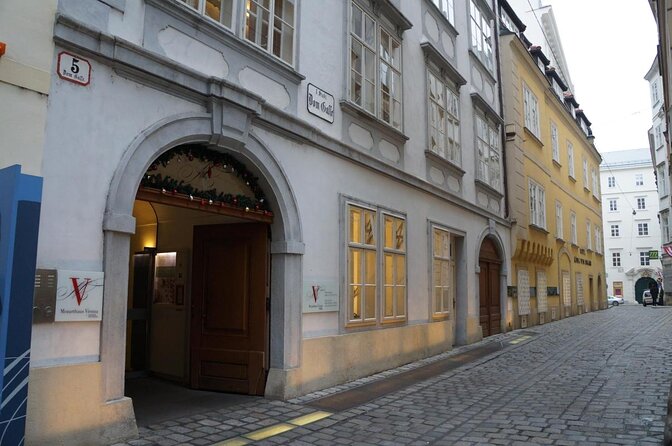
- The apartment is the star: Mozart’s largest and most elegant known home is on the first floor.
- Three floors tell three different stories: personal life, musical partnerships, and the Vienna years come together in one visit.
- The Marriage of Figaro connection is strong: Mozart wrote the opera here while working with librettist Lorenzo da Ponte.
- The audio guide adds needed context: Use it to understand the documents, rooms, and music clips.
- Plan one to two hours: You can move at your own pace rather than follow a fixed guided group.
- Expect interpretation, not a preserved interior: Few period furnishings remain, and some documents are copies.
Why Mozart’s Vienna apartment matters
Mozart’s Vienna years were his peak period. He had moved beyond the role of a traveling child prodigy and was working as an independent composer, performer, and teacher. The apartment at Domgasse 5 reflects that success.
From 1784 to 1787, Mozart and his family lived in what was described as his largest, most expensive, and most elegant home. This is also the only Mozart residence in Vienna that remains intact. That distinction gives the visit real weight, even though the rooms do not appear exactly as they did in the 1780s.
The apartment is valuable because it connects a physical place to specific works. Mozart composed The Marriage of Figaro here, along with three of the six Haydn Quartets. You are not simply looking at a famous person’s former address. You are standing in the setting where some of his best-known music took shape.
I find that connection more useful than a room filled with unrelated memorabilia. The apartment gives you a point of reference for Mozart’s daily life, while the displays explain what he was producing during those years.
More Mozart concerts and walks:
- Vienna: Mozart Concert at the Golden Hall
★ 4.6 · 3,986 reviews - Vienna: Classical Concert at Mozart’s First House
2,423 reviews - Vienna: Mozart and Strauss Concert at Schönbrunn
★ 4.5 · 2,364 reviews
Start on the third floor with Mozart in Vienna
The exhibition begins on the third floor and focuses on Mozart’s personal and social situation in Vienna. This is a smart starting point because it places the composer in his city before asking you to think about the music.
The exhibit uses a quotation from Mozart’s letter to his father Leopold as its starting point. The words describe his satisfaction with the place, and they help frame the apartment as part of Mozart’s changing life. He was no longer simply waiting for court employment or following a patron from city to city. Vienna offered him a demanding but promising professional setting.
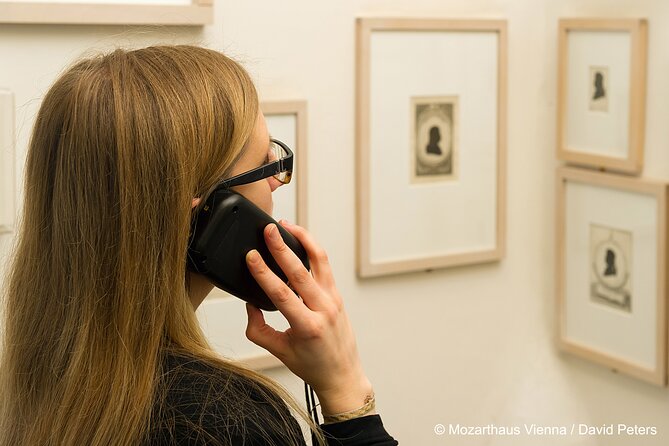
You will need the audio guide here. The rooms and display cases cannot explain Mozart’s position on their own, and much of the value comes from the spoken background. The guide helps you understand his social world, his working arrangements, and the pressures that shaped his Vienna career.
This section may appeal most to you if you enjoy biography and historical setting. It is less satisfying if you want a large collection of original objects. The museum has documents and visual material, but the presentation is not built around hundreds of personal possessions.
The second floor links Mozart to da Ponte and Figaro
The second floor turns toward Mozart’s professional circle. It examines his main musical and composer colleagues in Vienna, then gives attention to his partnership with librettist Lorenzo da Ponte.
That relationship matters because opera depends on more than the composer’s score. Mozart needed a strong theatrical text, and his cooperation with da Ponte produced The Marriage of Figaro and Don Giovanni. The exhibition helps you see these operas as the result of collaboration, not isolated acts of inspiration.
This part of the visit is especially useful if you know the music but not the people around it. You can connect famous works with the practical world that produced them: librettists, colleagues, performances, and the social setting of Vienna.
Video clips and performance material may appear in the presentation, including recordings connected with major opera productions. The museum also displays manuscript material, and part of Mozart’s Requiem manuscript is a particularly meaningful sight for music lovers.
Do not expect every item to be an original Mozart possession. The exhibition includes copies of documents and interpretive material. That is not necessarily a flaw, but it is worth knowing before you arrive. The museum works best when you treat it as a place of context and evidence, not as a treasure room filled with objects Mozart touched.
The first-floor apartment is the emotional center
The first-floor apartment is the reason many people make time for Mozarthaus Vienna. This is where Mozart lived with his family during the years that produced some of his most important music.
You can move through the rooms at your own pace. There is no need to rush behind a guide, and the self-guided format lets you pause when a document, image, or audio segment catches your attention. One hour may be enough for a brisk visit, but two hours makes more sense if you listen to the full audio material and stop to read.
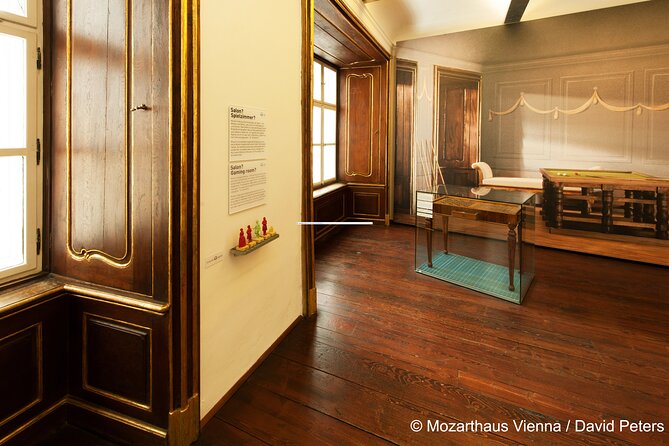
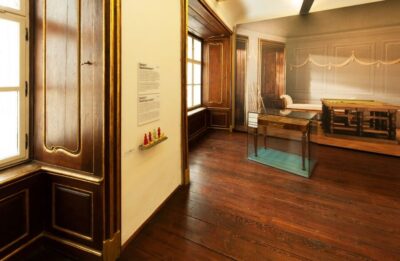
The apartment can feel surprisingly personal even when it is not packed with original furniture. You are seeing the actual space connected with Mozart’s domestic life, not merely a reconstructed set. Looking out from the windows also gives you a physical link to the street and surroundings Mozart knew.
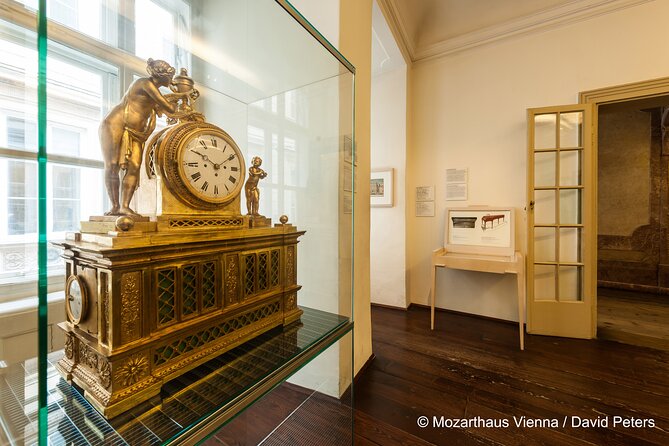
At the same time, keep your expectations realistic. The rooms do not recreate his household in full detail. Only a small amount of period furniture is present, and some displays rely on reproductions. If you need a room dressed exactly as it looked in 1785, this will not deliver that experience.
I prefer the museum’s honest approach to a lavish but speculative reconstruction. You can see the surviving space and then use the audio guide to fill in the missing details. The result is less theatrical, but it avoids pretending that every chair and table is original.
A few more Vienna outings worth weighing up
- Vienna: Classic Ensemble Vienna in St. Peter’s Church Ticket
★ 4.7 · 4,819 reviews - Vienna Kunsthistorisches Museum Day Admission Ticket
★ 4.6 · 3,690 reviews - Vienna: Tickets for Mozarthaus Vienna with Audio Guide
★ 4.2 · 2,344 reviews - Vienna: Skip-the-Line Entrance Ticket to the Danube Tower
★ 4.5 · 2,303 reviews
How the audio guide changes the visit
The audio guide is included and is available in 13 languages for adults and eight for children. That makes the ticket practical for international visitors and families who do not want to read every panel in English.
Use it from the beginning rather than treating it as an optional extra. The third-floor material can seem abstract without explanation, and the second-floor discussion of colleagues and opera partnerships benefits from a clear narrative.
You do not need to bring your own headphones, according to the supplied experience details. That is a small but useful convenience, especially if you are moving through Vienna with limited luggage.
The audio format also suits the apartment. You can listen while standing in each room, then pause and look around without waiting for a group. The tradeoff is that the visit depends on your own attention. If you skip the guide, the museum may feel like a sequence of rooms with documents rather than a connected story.
What you will and will not see
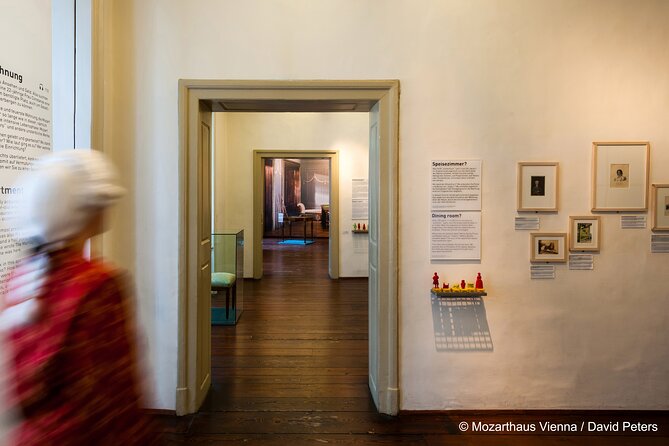
Mozarthaus Vienna combines the apartment with museum displays, manuscript material, copies of documents, images, and performance clips. The mix gives you several ways to approach Mozart’s life, but it also creates uneven moments.
The strongest material includes:
- The intact apartment where Mozart lived from 1784 to 1787
- Information about his Vienna social and professional life
- His partnership with Lorenzo da Ponte
- The connection to The Marriage of Figaro and Don Giovanni
- Manuscript displays, including part of the Requiem manuscript
- Audio and video material that links documents to music
The weaker point is the limited number of original personal objects. A few pieces of period furniture help, but you should not expect a room-by-room collection of Mozart’s belongings.
Photography inside may be restricted, so do not plan on documenting every display. The restriction can be frustrating if you like to take notes through pictures, but it also encourages you to pay attention to the rooms and use the audio guide instead.
The museum’s modern presentation may suit you if you like multimedia interpretation. If you prefer untouched interiors and large collections of original artifacts, you may find the visit less convincing.
Allow one to two hours, not a rushed half hour
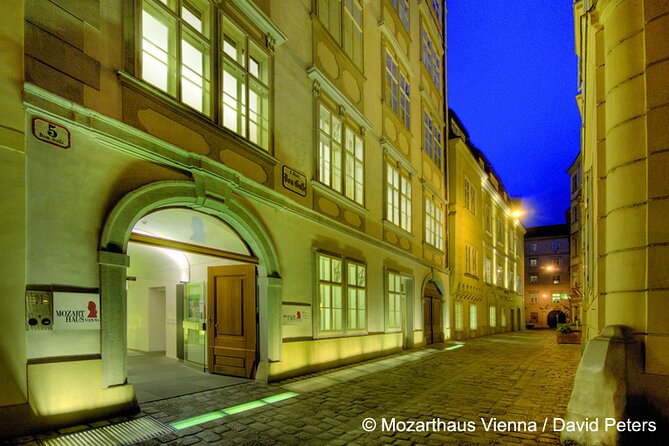
The stated visit length is about one to two hours. I would allow the full two hours if Mozart is a serious interest, especially if you listen to the audio guide and read the documents.
A quick one-hour visit can work if you focus on the apartment and the main displays. You can also stay longer at your own pace because this is not a fixed walking tour with a guide setting the schedule.
The opening hours are 10 a.m. to 7 p.m. daily through the end of 2026. That wide window makes it easy to fit the museum between sights in central Vienna. The house is near public transportation and close to St. Stephen’s Cathedral, so it works well as part of a central-city walking day.
The location has another advantage. After the museum, you can continue through the surrounding streets and connect the indoor exhibition with the historic center outside. The experience is not limited to the rooms themselves. The address places you near several major Vienna sights, including the cathedral.
Is the $19.27 ticket good value?
At about $19.27 per person, the ticket is fairly priced for a specialist museum, but its value depends on what you want to see.
I think the cost is reasonable if you care about Mozart, classical music, opera, or the history of Vienna. You receive access to three floors, the intact apartment, and an audio guide in multiple languages. The ability to spend one to two hours inside, without a fixed group schedule, also adds practical value.
The ticket is harder to justify if you expect a grand collection of original objects. The museum has few personal artifacts, and some documents are copies. You are paying for the location, interpretation, and connection to Mozart’s work rather than for a large number of rare objects.
For a first-time Vienna visit, I would compare this with your interest level. If you already plan to see several music museums, the apartment may be the most distinctive feature here. If Mozart is one of the main reasons you came to Vienna, the price is easier to defend.
Who will enjoy Mozarthaus Vienna most?
This visit suits you best if you fall into one of these groups:
- You listen to Mozart and want a physical connection to his work.
- You enjoy composer biographies and the social life behind famous music.
- You want to understand how The Marriage of Figaro and Don Giovanni came together.
- You prefer self-guided museums where you can set your own pace.
- You are visiting central Vienna and want a manageable indoor stop near St. Stephen’s Cathedral.
- You are traveling with children who can use one of the eight child audio-guide languages.
It may not be your best choice if you want an elaborate period-house recreation, a large collection of original belongings, or a guided lecture from a live specialist. The experience is quiet, interpretive, and focused on Mozart’s Vienna period.
The museum can also work for mixed-interest groups. Someone fascinated by music can spend two hours with the audio guide, while another person can make a shorter circuit of the main apartment and displays.
Practical details that make the visit easier
Your confirmation arrives at booking, and the ticket is mobile, so you can keep it on your phone. The experience is offered in English, while the audio guide provides additional language choices.
No food or drinks are included, and hotel pickup and drop-off are not part of the ticket. You make your own way to the museum, but it is near public transportation.
The maximum group size is listed as 10 travelers, although the museum visit itself is self-guided. That small number applies to the booked activity rather than creating a traditional live tour experience.
Service animals are allowed, and most people can participate. If you need specific assistance beyond that, confirm the details before booking.
Free cancellation is available up to 24 hours before the start time. Canceling or changing the booking less than 24 hours before the visit does not qualify for a refund.
Should you book Mozarthaus Vienna?
Book it if Mozart’s music matters to you, especially if you want to see the apartment tied to The Marriage of Figaro, the Haydn Quartets, and Mozart’s most productive Vienna period. The audio guide, manuscript material, and three-floor structure give the visit more substance than a quick house plaque.
Skip it if your main goal is to see original furniture and personal belongings. The museum offers a surviving apartment and strong historical context, but it does not recreate Mozart’s home in full detail.
For most music lovers, I would allow two hours, begin with the audio guide, and take time on the first floor. The apartment is the heart of the experience, while the upper floors explain why those rooms mattered.
FAQ
Where is Mozarthaus Vienna located?
Mozarthaus Vienna is in central Vienna, near St. Stephen’s Cathedral and public transportation.
What are the opening hours?
The museum is open daily from 10 a.m. to 7 p.m. The listed schedule runs through December 31, 2026.
How long does a visit take?
Plan about one to two hours, depending on how much of the audio guide and exhibition material you use.
Is the ticket available on a mobile phone?
Yes. The experience includes a mobile ticket.
Is an audio guide included?
Yes. An audio guide is available in 13 languages for adults and eight languages for children.
Is the visit guided by a live person?
The ticket provides a self-guided museum visit with an audio guide. No live guide is specified.
What does the admission include?
Admission to the Mozarthaus Vienna exhibition is included, along with access to the three-floor presentation and Mozart’s apartment.
Are food, drinks, or hotel transfers included?
No. Food and drinks are not included, and hotel pickup and drop-off are not provided.
Can I cancel the ticket for a refund?
Yes, if you cancel at least 24 hours before the experience start time. Cancellations or changes made less than 24 hours in advance are not accepted for a refund.
Just reviewed in Vienna
- World War II History Vienna Old Town Private Walking Tour★ 4.8 · 9 reviews
- Vienna: Winery and Wine Tasting Tour with a Wine Expert★ 5.0 · 5 reviews
- Vienna: Wine Tasting E-Bike Tour★ 4.9 · 46 reviews
- Vienna: Unforgettable Private City Tour★ 5.0 · 7 reviews
- Vienna Urban Art Tour: Explore a different side of Vienna!★ 3.8 · 14 reviews
- Vienna: Concert by the Vienna Baroque Orchestra★ 4.6 · 56 reviews
- Vienna: Sunday Brunch Danube Cruise & Live Music★ 4.2 · 42 reviews
- Vienna Supreme Orchestra at Palais Niederösterreich★ 4.8 · 10 reviews
Vienna Mozart Concerts and Tours, compared.
Vienna Mozart Concert in Historical Costumes at the Musikverein
Read our review →
Browse the lists this tour appears in