
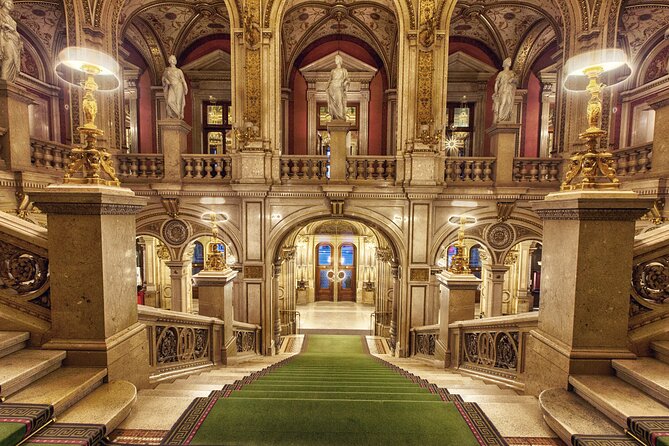
Reviewed · VIENNA CLASSICAL CONCERTS
STATE OPERA – PRIVATE guided tour (tickets included)
The most intriguing part of this Vienna State Opera tour is not just the gold, marble, and red velvet. It is the building’s troubled beginning. Opened 150 years ago, the opera house caused such a scandal that one architect died before seeing its full success. Inside, Giselle connects that drama to the artists, political figures, stage crews, and daily routines that keep the house alive.
I like two things right away. First, the tour is private, so Giselle can adjust the conversation to your interests, whether you care about Beethoven, opera stars, architecture, or Vienna society. Second, you get more than a pretty-room walk. You’ll hear how stage sets change from day to day, where they are kept, and how the Opera Ball brings millionaires and local politicians together.
The main consideration is cost. At $267, this is a serious purchase for 90 minutes, even with admission included. It makes the most sense for a couple, family, or small group that values personal attention. The tour covers areas open to the public, so it is not a backstage pass to every working corner of the opera house.
Key points about the State Opera tour
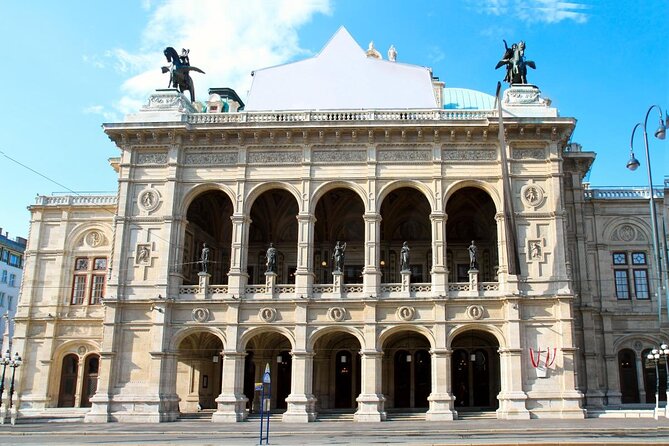
- A private 90-minute visit: Your group tours with Giselle rather than joining a large shared group.
- Architecture with a dramatic backstory: Learn why the original building caused public outrage and compare its old and postwar sections.
- Opera names brought to life: The discussion may include Placido Domingo, Montserrat Caballé, José Carreras, Gustav Mahler, Herbert von Karajan, Rudolf Nureyev, and Margot Fonteyn.
- Behind-the-scenes work explained: Giselle describes changing stage sets, storage areas, and the many people employed by the institution.
- Admission is included: You meet at the opera house and finish there after about an hour and a half.
- A guide who adapts to you: Giselle has adjusted tours for visitors interested in music, Beethoven, Vienna, and local culture.
Why the Wiener Staatsoper deserves your time
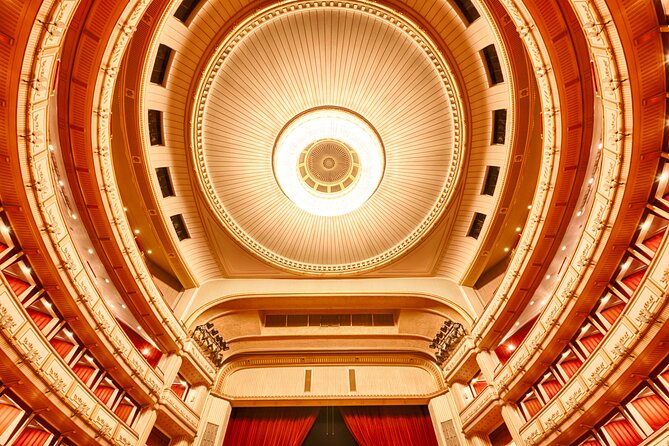
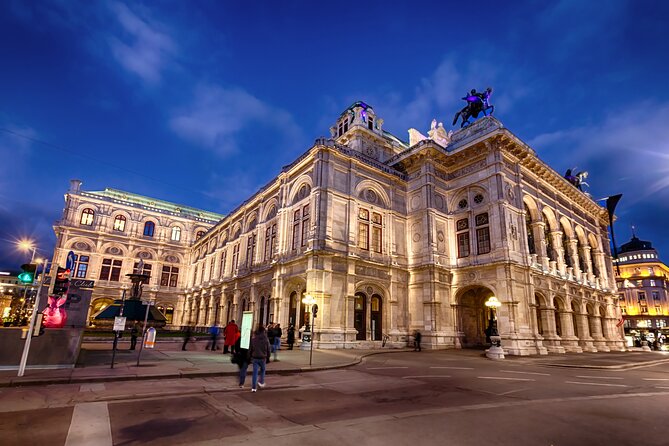
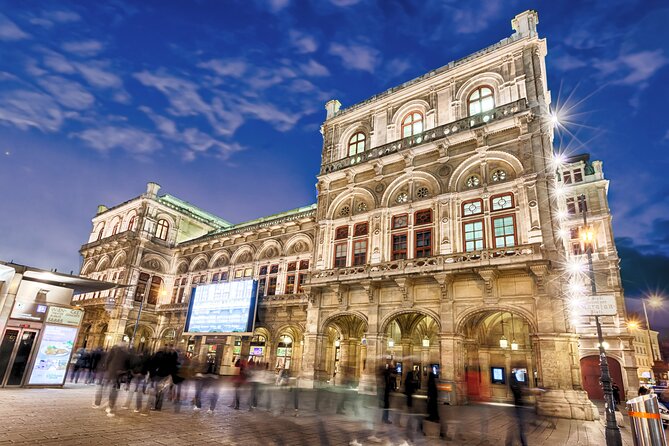
Vienna’s State Opera is one of those buildings that can seem familiar before you enter it. You have probably seen its grand exterior in photographs, but the interior tells a more complicated story. This is not simply an elegant old theater preserved in amber. It combines imperial showmanship, painful criticism, wartime loss, postwar rebuilding, and a demanding modern performance schedule.
The tour begins at Opernring 2, in the center of Vienna. That location is useful if you are already visiting the Ringstrasse, Hofburg, Albertina, or central shopping streets. Public transportation is nearby, and the activity returns to the same meeting point, so you do not need to plan a complicated final transfer.
I like this kind of introduction because it gives the building a human scale. Grand staircases and painted ceilings are easy to admire for five minutes. The story of how the building was received, who worked there, and how the institution survived makes the decoration easier to understand.
More classical concerts in Vienna:
- Vienna: Vivaldi’s Four Seasons Concert in Karlskirche
★ 4.7 · 14,951 reviews - Vienna: Classical Concert in the World-Famous Musikverein
★ 4.6 · 6,673 reviews - Vienna: Mozart Concert at the Golden Hall
★ 4.6 · 3,986 reviews
The scandal behind the grand facade
One of the strongest parts of the visit is the opera house’s early controversy. The building was constructed about 150 years ago, but its first reception was far from triumphant. Critics attacked the design, and the scandal had a tragic result: one of the architects died before the building could enjoy the success it later gained.
That fact changes the way you look at the old section. The pomp and ceremony were not always admired. A building that now represents Vienna’s musical identity once drew harsh public judgment. Giselle uses this episode to show that famous landmarks are often less secure at birth than they appear today.
You should listen for the contrast between the public image of the opera and the pressure behind it. Opera houses are expensive, political, and highly visible. An architect, conductor, singer, or director can become celebrated one season and criticized the next. That tension gives the tour a useful edge.
Old splendor and postwar rebuilding
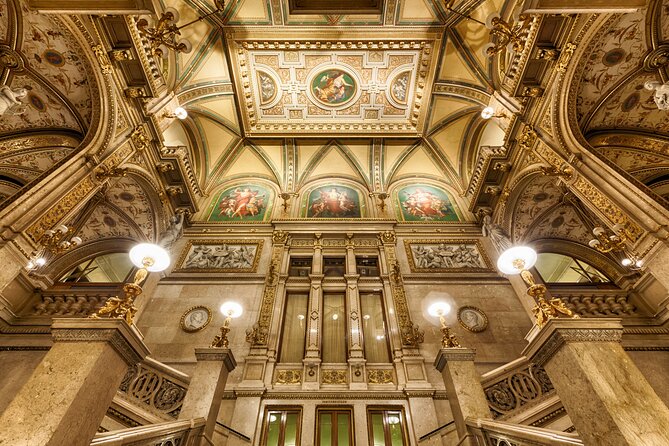
The route includes both the ornate older areas and the modern sections built after the Second World War. This contrast is one of the clearest reasons to choose a guided visit rather than simply walking through a lobby on your own.
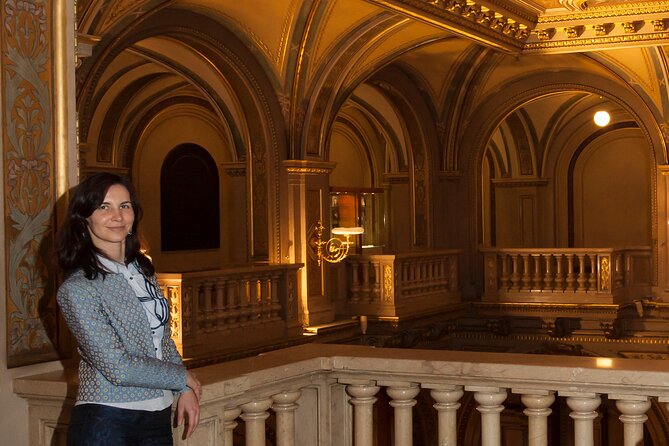
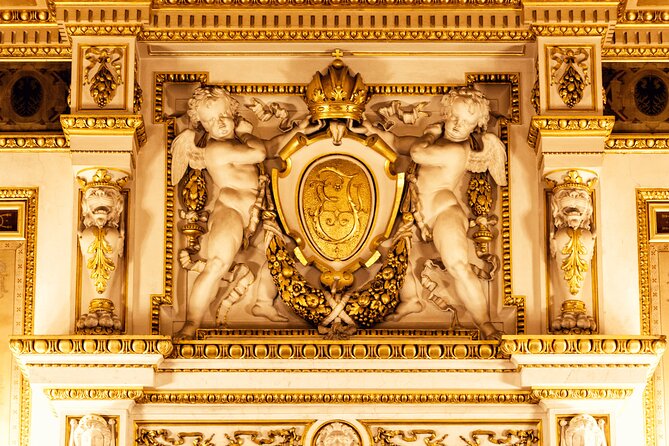
The older spaces offer the formal Vienna many people expect: elaborate decoration, ceremonial rooms, and the feeling of 19th-century society at its most polished. You can picture patrons arriving in formal clothes, meeting under grand ceilings, and treating an evening at the opera as a major social event.
The postwar areas tell a different story. They remind you that the building did not remain untouched through the 20th century. Rebuilding required practical decisions as well as respect for the past. The result is a house where historic decoration and newer construction exist side by side.
I appreciate that the tour does not reduce the opera to pretty interiors. If architecture is your main interest, ask Giselle to point out the difference between the original design and the rebuilt parts. The private format gives you room to focus on those comparisons instead of following a fixed speech for a large crowd.
The artists who shaped the stage
The State Opera’s story is also a story of people. Giselle discusses celebrated singers, conductors, dancers, and directors associated with the house, including Placido Domingo, Montserrat Caballé, José Carreras, Gustav Mahler, Herbert von Karajan, Rudolf Nureyev, and Margot Fonteyn.
This list crosses several generations and several kinds of performance. Domingo, Caballé, and Carreras represent major operatic voices. Mahler and von Karajan bring the conductor’s role into view. Nureyev and Fonteyn show how dance also belongs to the institution’s public identity.
You do not need to be an opera expert to benefit. A good guide can turn names into stories about style, reputation, rivalries, and the changing expectations of audiences. If you already play music or sing, you may want to use the private setting to ask more detailed questions. One booking was particularly suited to a musician, with discussion of Beethoven and the wider musical life of Vienna.
Giselle’s background is a practical advantage here. Her tour is not limited to dates and names. She brings together music, architecture, history, and everyday Viennese customs. Past visitors also valued her friendly manner, humor, clear communication before meeting, and ability to adjust the route of conversation to their interests.
A few more Vienna outings worth weighing up
- Vienna: Classic Ensemble Vienna in St. Peter’s Church Ticket
★ 4.7 · 4,819 reviews - Vienna Kunsthistorisches Museum Day Admission Ticket
★ 4.6 · 3,690 reviews - Vienna: Tickets for Mozarthaus Vienna with Audio Guide
★ 4.2 · 2,344 reviews - Vienna: Skip-the-Line Entrance Ticket to the Danube Tower
★ 4.5 · 2,303 reviews
How the opera works beyond the curtain
The most useful information may be about what happens when no audience is watching. Stage scenery changes daily, and Giselle explains how those changes are managed. She also discusses where sets are stored and how many people work for this famous institution.
That is the kind of detail I want from an opera-house visit. A performance can make the work look effortless, but an opera requires a large organization. Musicians and singers are only part of it. Sets, costume work, stage changes, technical crews, administration, and building operations all support the few hours seen from the seats.
The tour does not promise access to every hidden work area. Instead, it explains the operation while visiting the portions open to the public. That distinction matters. If you are hoping to walk through restricted workshops or stand behind the stage during a rehearsal, this may not meet that expectation. If you want a clearer picture of how a major opera house functions, the explanation should add real value.
I also like that these details help families. Younger visitors may not care about a long list of composers, but they may remember that whole stage worlds can be changed quickly and stored somewhere when the curtain falls. The practical side of theater often makes the building more interesting than a formal lecture about decoration.
The Opera Ball and Vienna society
The annual Opera Ball offers another angle on the building. Giselle explains how the event works and how millionaires and local politicians take part. It is a useful reminder that the State Opera is not only a place for music. It is also part of Vienna’s social and civic life.
The ball carries a certain old-world glamour, but the subject is best understood with a little distance. This is a public institution with an international artistic reputation, yet it also hosts one of the city’s most visible social events. That mix of culture, money, politics, and ceremony says a great deal about Vienna.
You may especially enjoy this section if you are interested in local customs rather than only architecture. Ask questions about the people involved and the role the ball plays in the city. Since this is a private tour, you are not locked into a one-size-fits-all account.
What the 90-minute format feels like
An hour and a half is long enough to cover the main public areas without turning the visit into an all-day commitment. That makes it easy to fit between central Vienna sights, a meal, or an evening performance.
The pace should suit most people because the activity remains in one opera house and finishes where it begins. The available information says most people can participate, and the meeting point is close to public transportation. Still, you should allow a little extra time to find Opernring 2 and arrive ready for the start.
A private tour can feel more relaxed than a large group visit. You can ask a question when it occurs to you, request more detail about a favorite composer, or shift the conversation toward architecture. Giselle has also shown flexibility before the meeting, which is useful if your group has a clear interest.
The limitation is that 90 minutes passes quickly. You will receive a focused introduction, not an exhaustive account of every room, performer, or production. If you want a long technical study of opera staging, you may leave with questions. I would treat that as a reason to prepare one or two interests in advance, not as a flaw in the format.
Is $267 good value?
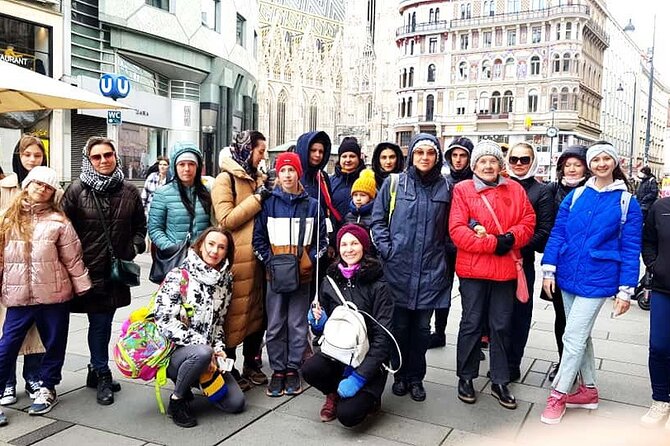
At $267, the price needs careful thought. The strongest value comes from the private arrangement and the included admission. You are paying for Giselle’s time, a personal conversation, and a visit designed for your own group rather than only for entry into the building.
The value changes with group size. For one or two people, the cost per person is high. For a family or group of friends sharing the price, the private format becomes easier to justify, especially if several people care about different parts of Vienna’s culture.
You should also compare this with your own interests. If you only want to see the interior and take a quick look around, a private 90-minute tour may be more than you need. If you want context, names, architecture, stage operations, and local social customs in one visit, the package offers a fuller experience than admission alone.
The tickets are included, which removes one extra purchase. The price information does not specify a separate performance ticket, so you should regard this as a guided visit to the opera house, not as an evening opera booking.
Who will enjoy Giselle’s approach?
I would recommend this tour most strongly to:
- Music lovers who want to connect famous performers and conductors with the institution.
- Architecture fans who enjoy comparing the original ornate sections with postwar rebuilding.
- Families and friends who want a private schedule and the freedom to ask questions.
- First-time Vienna visitors who want the State Opera explained as part of the city’s culture.
- Repeat visitors who have seen the Ringstrasse but want more substance behind one of its major buildings.
- Visitors who prefer conversation over a fixed, crowded group presentation.
Giselle is a particularly good fit if you want a warm, flexible guide. The strongest praise centers on her kindness, humor, professionalism, clear communication, and ability to respond to the interests of the people in front of her. Spanish-speaking visitors have also described her tour as friendly, detailed, and easy to follow.
I would hesitate only if the price is beyond your comfort level, if you want unrestricted backstage access, or if you mainly want to attend a live performance. Those are different goals from a guided architectural and cultural visit.
Practical details before you book
Your meeting point is the Vienna State Opera at Opernring 2, 1010 Vienna. The tour ends back at that location, which is convenient for continuing through central Vienna or returning to nearby public transportation.
A mobile ticket is provided. Booking confirmation normally arrives at once, though a reservation made within one hour of departure may need to wait for availability confirmation.
The activity is private, so only your group takes part. The published information says most people can participate, but it does not provide detailed mobility notes for every area. If someone in your group has a specific access need, ask before booking rather than relying on a general statement.
Free cancellation is available until 24 hours before the start time for a full refund. Inside that window, the payment is not refunded and changes are not accepted. The cut-off uses Vienna local time, so check the clock carefully if you are booking from another time zone.
Should you book this State Opera tour?
Book it if you want the Vienna State Opera to become more than a handsome photo stop. The combination of architectural contrast, famous artists, Opera Ball customs, and stage logistics gives you several ways into the building. Giselle’s flexible style is especially useful for a private group with mixed interests.
Skip it if you are mainly looking for a low-cost entrance, a full backstage production tour, or a performance ticket. At $267, this is a premium choice, but it can be worthwhile for a group that values personal attention and wants an informed, lively account of Vienna’s musical center.
FAQ
Where does the private State Opera tour begin?
It begins at the Vienna State Opera, Opernring 2, 1010 Wien, Austria.
Where does the tour finish?
The activity ends back at the Vienna State Opera meeting point.
How long does the tour last?
The tour lasts approximately 1 hour and 30 minutes.
Are admission tickets included?
Yes, admission to the State Opera tour is included.
Is this a private activity?
Yes. Only your own group participates in the tour.
Who leads the tour?
The experience is provided by Giselle Tours Vienna and led by Giselle.
What parts of the opera house will you see?
You will visit all areas that are open to the public during the tour, including the ornate older sections and modern areas built after the Second World War.
What subjects does the guide cover?
The tour covers the opera house’s architecture, its early scandal, famous artists, the Opera Ball, changing stage sets, set storage, and the number of people working for the institution.
Can you cancel for a full refund?
Yes. You can cancel at least 24 hours before the start time for a full refund. Cancellations and changes made within 24 hours are not refunded or accepted.
Just reviewed in Vienna
- World War II History Vienna Old Town Private Walking Tour★ 4.8 · 9 reviews
- Vienna: Wine Tasting E-Bike Tour★ 4.9 · 46 reviews
- Vienna: Winery and Wine Tasting Tour with a Wine Expert★ 5.0 · 5 reviews
- Vienna: Unforgettable Private City Tour★ 5.0 · 7 reviews
- Vienna Urban Art Tour: Explore a different side of Vienna!★ 3.8 · 14 reviews
- Vienna: Concert by the Vienna Baroque Orchestra★ 4.6 · 56 reviews
- Vienna: Sunday Brunch Danube Cruise & Live Music★ 4.2 · 42 reviews
- Vienna Supreme Orchestra at Palais Niederösterreich★ 4.8 · 10 reviews
Vienna Classical Concerts, compared.
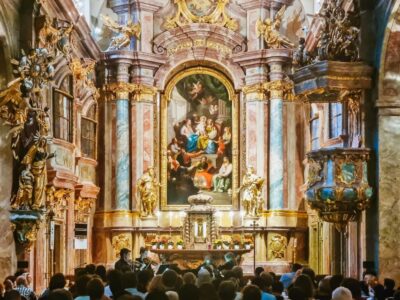
Classical Concert in St. Anne’s Church (Annakirche)
Read our review →
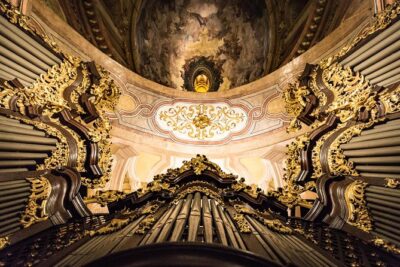
Vienna Classical Concert at St. Peter’s Church
Read our review →Classical Concert in St. Anne’s Church (Annakirche)
Read our review →Browse the lists this tour appears in