
Reviewed · VIENNA MOZART CONCERTS AND TOURS
Vienna: Tickets for Mozarthaus Vienna with Audio Guide
Mozart’s only preserved Vienna apartment gives you a rare sense of place: this is where he lived from 1784 to 1787 and composed more music than anywhere else, including The Marriage of Figaro. I especially like the self-guided pace and the useful audio tour, which lets you spend more time on the music and less time being herded from room to room.
I also like the focus on Mozart’s Vienna years rather than a rushed account of his entire life. The main caution is that the apartment is not a fully furnished time capsule. Much of the visit consists of panels, images, projections, and historical explanation, with only a small number of original objects.
Key points
- Mozart’s only preserved Vienna apartment: See the rooms connected with his productive years from 1784 to 1787.
- Figaro connection: Learn about the apartment where Mozart composed his famous opera.
- Audio in many languages: Adult narration is available in 13 languages, with a children’s version in 8.
- Three exhibition levels: The visit goes beyond the apartment to explain Mozart’s life, work, and Vienna.
- Optional music pairing: Add Haus der Musik for four floors of hands-on sound exhibits.
- Practical value: Admission costs about $18 per person, includes the special exhibition, and allows a one-day visit.
Entering Mozart’s Vienna apartment
The main reason to visit Mozarthaus Vienna is simple: you can walk through the only one of Mozart’s Vienna apartments that has been preserved. Mozart lived here from 1784 to 1787, during the period when his creative work reached its high point.
This was not just another address in a long list of residences. Mozart composed more music in this apartment than anywhere else. The Figaro connection gives the visit a clear center. You are not merely looking at a museum room linked to a famous composer. You are standing in the place connected with one of his best-known works.
I find that kind of connection more useful than a room full of unrelated memorabilia. The building gives you a physical anchor, while the exhibition explains what Mozart was doing in Vienna and why those years mattered.
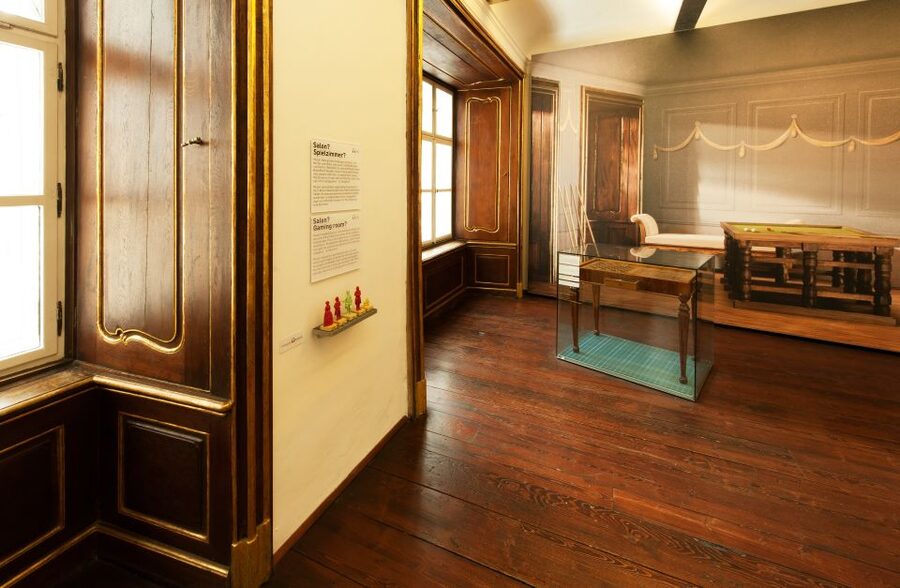
Still, set your expectations carefully. The apartment does not appear as a fully decorated recreation of Mozart’s home. One visitor expected furnished rooms and at least one period instrument, but found the spaces largely empty. Another noted that relatively few Mozart objects are original or directly connected to his use of the apartment.
That is important. You come here for the address, the historical setting, and the story told around it. You do not come for a large collection of personal possessions.
More Mozart concerts and walks:
- Vienna: Mozart Concert at the Golden Hall
★ 4.6 · 3,986 reviews - Vienna: Classical Concert at Mozart’s First House
2,423 reviews - Vienna: Mozart and Strauss Concert at Schönbrunn
★ 4.5 · 2,364 reviews
Three levels that put the rooms into context
The museum spreads its presentation across three exhibition levels. The apartment itself is the emotional core, but the surrounding displays give you a fuller picture of Mozart’s Vienna years and his most important works.
The first part helps you understand the setting. You see the rooms and get a sense of the size and layout of an eighteenth-century home. The visit is not very large, which is good news if you want a manageable museum stop in central Vienna. You can take your time without committing half a day to a huge collection.
The next sections place Mozart’s work within the city and period around him. The focus remains on his Vienna life rather than offering a full biography from childhood onward. If you already know Mozart, this concentration will feel useful. If you are starting from scratch, you may find yourself wanting a short introduction to his earlier life before the museum turns to Vienna.
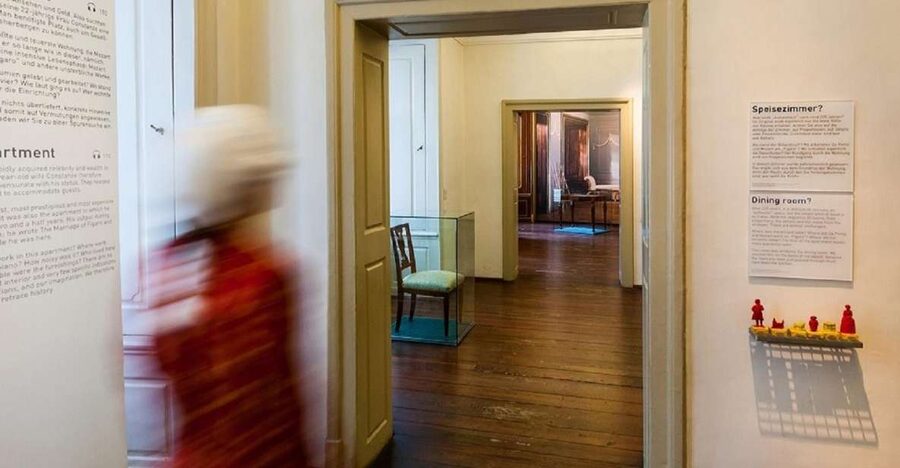
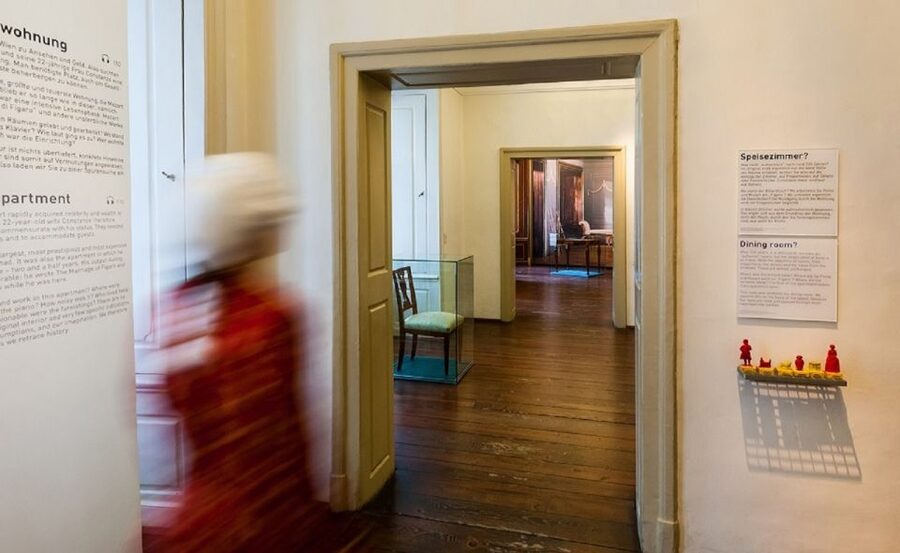
Much of the material is presented through information panels, images, projections, and audio. That creates a serious, study-oriented visit. It also means the museum can feel text-heavy if you are hoping for interactive displays or many objects.
I would plan on listening and reading in short bursts. The audio gives the rooms a voice, but you do not need to absorb every panel. Pick out the sections that interest you, especially those connected with Mozart’s composition, household, and time in Vienna.
The audio guide makes the museum easier to follow
The audio guide is included, and it is available for adults in English, German, Slovak, Spanish, French, Hungarian, Italian, Polish, Russian, Chinese, Czech, Japanese, and Korean. A children’s audio guide is offered in eight languages.
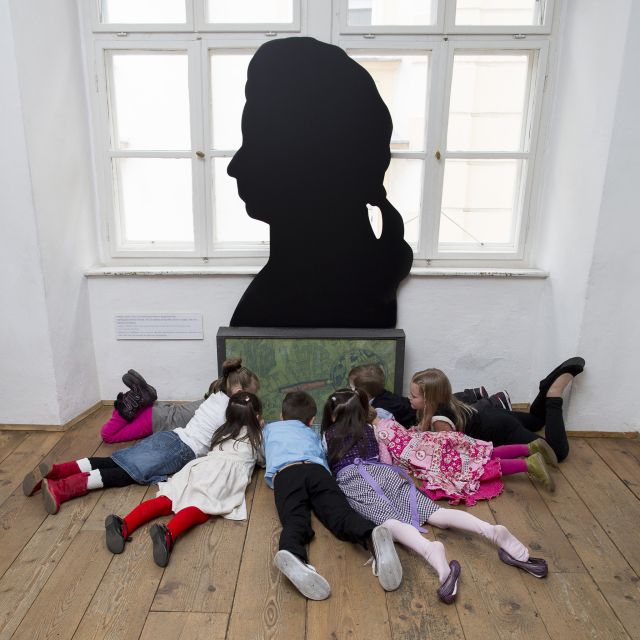
That range makes the ticket practical for mixed-language families and international groups. The children’s option also helps, though the exhibition’s large amount of reading may still feel better suited to older children. One family-oriented comment praised the audio offer but warned that there was a lot of text for a child.
Bring headphones if you have them. Some visitors have been asked to use their own phone for the audio, and others found that headphones made the visit easier because their hands stayed free. The exact audio setup can vary, so it is sensible to carry earbuds and make sure your phone is charged.
The audio is not simply a pleasant extra. It helps explain why an otherwise spare room matters. Without it, you may look at a wall, a floor plan, or a display case and move on quickly. With it, you get the historical connection and the musical context.
There is one practical drawback: some audio sections are long. You may need to wait before moving to the next room or decide to stop a track early. If you listen to every word, the visit can feel slower than expected, and there are not always enough seats for you to sit comfortably while listening.
The museum also asks you not to make video recordings or take photographs inside. That may disappoint you if you like to document interiors, but it does keep the rooms quieter and more focused.
What you actually see, and what you do not
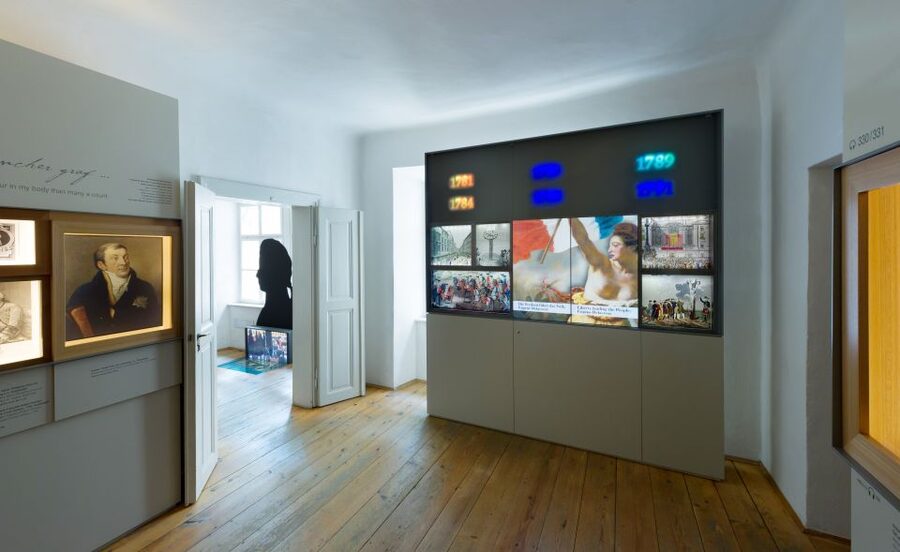
The most honest way to describe Mozarthaus Vienna is as a historical exhibition built around an apartment, not as a room-by-room reconstruction of Mozart’s daily life.
You do see the preserved residence and learn about its layout. You also encounter material about Mozart’s work, his period, and the Vienna years that shaped his career. Some displays use projections or reproductions in place of original items.
That distinction matters because Mozart’s surviving belongings are limited. You should not expect a house filled with his instruments, clothes, furniture, and handwritten papers. One original note that had been displayed during an earlier visit was later shown as a projection instead, a reminder that museum displays can change.
The limited number of objects may frustrate you if you prefer a traditional house museum. On the other hand, the lack of clutter keeps attention on the story and the music. I would approach the visit as a place to understand Mozart’s working life rather than a chance to inspect a large personal collection.
The exhibition can also feel less interactive than modern museums. An authentic piano attracted one visitor’s attention, but it was not available to play. If you want sound-based activities, the optional Haus der Musik is likely to suit you better.
More self-guided walks and audio tours:
- Vienna: Schlumberger Wine Cellar Guided or Self-Guided Tour
★ 4.8 · 285 reviews - Vienna: Scavenger Hunt Self-Guided Tour
★ 4.7 · 83 reviews - Vienna: The Great Plague Exploration Game
★ 4.5 · 60 reviews - Vienna Walking Tour with Audioguide on Your Smartphone
★ 4.0 · 52 reviews
A self-guided visit with room to set your own pace
This is not a conventional guided walking tour with a named guide leading a fixed group. You move through the museum independently with the audio guide. That gives you control over the pace and lets different members of your party focus on different levels of interest.
I like this format for a museum about music. You may want to listen to a complete explanation of Figaro, while someone in your group may prefer to read only the short panels. You can separate briefly, pause, and catch up without holding up a guide or a group.
The booking information describes the group type as small, limited to 10 participants. Even so, the museum visit itself is fundamentally self-guided. The small-group limit matters most at entry and for the general booking arrangement, not as a promise of a personal lecture.
Allow enough time to listen properly, but do not feel obliged to hear every recording. The venue is not very large, yet the material can take longer than the rooms suggest. If you are a dedicated Mozart fan, you may want to spend a good part of your day here. If you are a casual classical-music listener, a shorter visit may be enough.
The physical setup is worth considering. Several people found themselves standing while listening, and some wanted more seats. Heating has also felt too strong at times, while another visit found the rooms hot. Conditions can vary, but you may appreciate a slower pace and a chance to pause between displays.
The annual special exhibition adds a reason to return
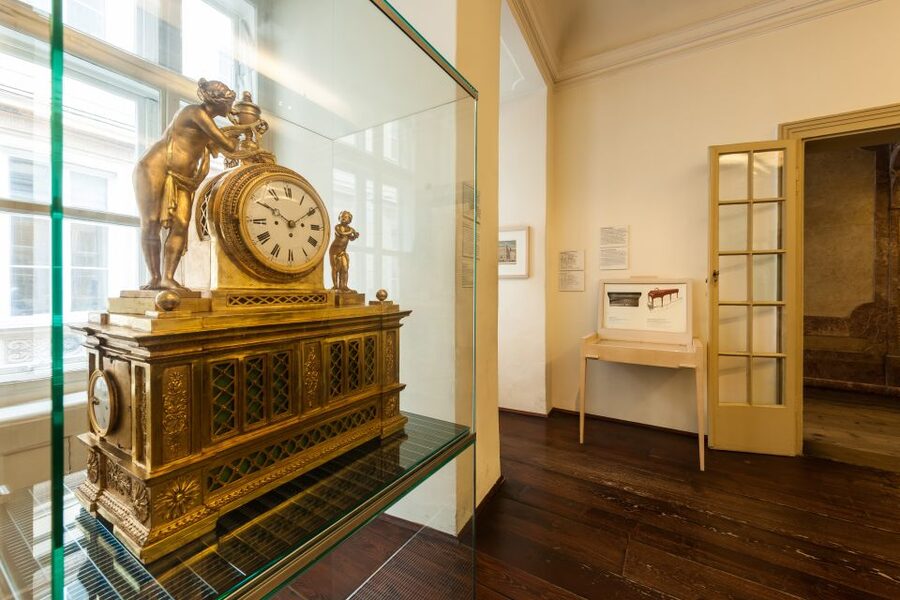
Admission includes the museum’s changing special exhibition. Its subject changes each year, so the exact material depends on your visit.
This is a useful part of the ticket because it gives repeat visitors something new to see. It also prevents the museum from being only a one-time stop for people who already know the permanent display.
Do not book based on the special exhibition alone unless you have checked its current theme. The permanent presentation is the reliable reason to visit. The temporary section is an added benefit, and its appeal will depend on your musical interests.
Adding Haus der Musik for a fuller music day
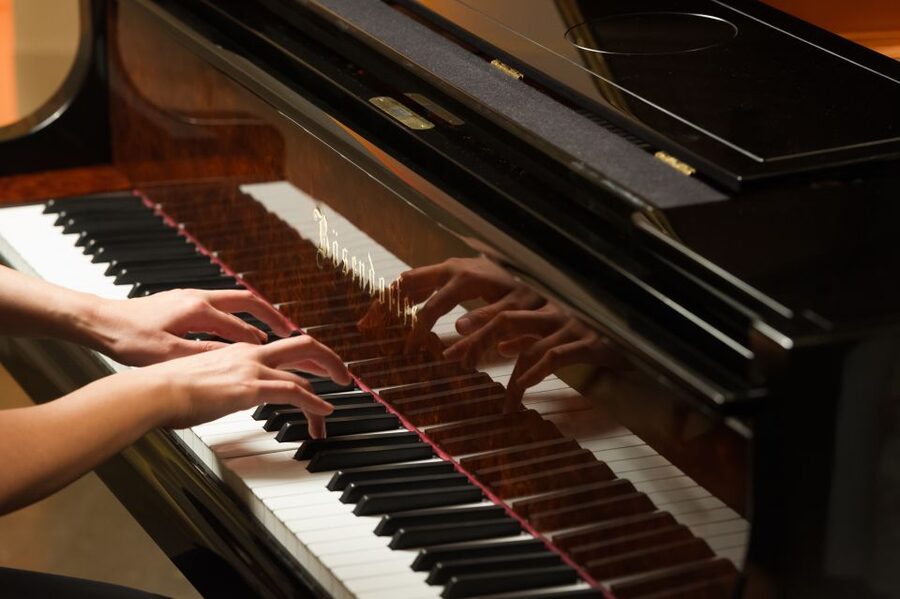
You can choose a combined ticket for Mozarthaus Vienna and Haus der Musik. The second museum is in a historic palace in central Vienna and uses four floors of interactive exhibits about sound and music.
This pairing makes sense because the two places do different jobs. Mozarthaus gives you the historical apartment and Mozart’s Vienna story. Haus der Musik lets you try making music and explore sound in a more hands-on way.
If you are traveling with children or with people who find long information panels tiring, the combination may create a better balance. Start with the quieter, more historical Mozarthaus, then use Haus der Musik for a more active change of pace. You can also reverse the order, depending on your schedule.
The exact combined price is not given here, so compare it with the cost of two separate admissions before booking. The value is strongest if you genuinely want both museums. If your main goal is Mozart’s apartment, the basic ticket is the more focused choice.
Is the $18 admission good value?
At about $18 per person, the ticket is reasonably priced for a central Vienna museum, especially because it includes the audio guide, cloakroom, and changing special exhibition. The value is strongest for Mozart fans and for anyone who wants a meaningful musical stop rather than a quick photo opportunity.
You are paying for interpretation as much as for physical objects. The apartment itself is modest in size, and the original material is limited. If you judge the ticket by the number of rooms or artifacts, it may feel expensive.
If you listen to the audio and read the displays, the visit offers much more. You learn about Mozart’s most productive Vienna period, see the home tied to Figaro, and gain a clearer sense of the composer beyond stage and film portrayals.
The combo with Haus der Musik can make financial sense for a full music-themed day, but only if you have the time and interest. Do not add it just because it is available. Mozarthaus works well as a stand-alone visit.
The ticket is valid for one day, and free cancellation is available up to 24 hours before the booked time. You can also reserve now and pay later, which helps if your Vienna schedule is still shifting.
Who will enjoy Mozarthaus Vienna most?
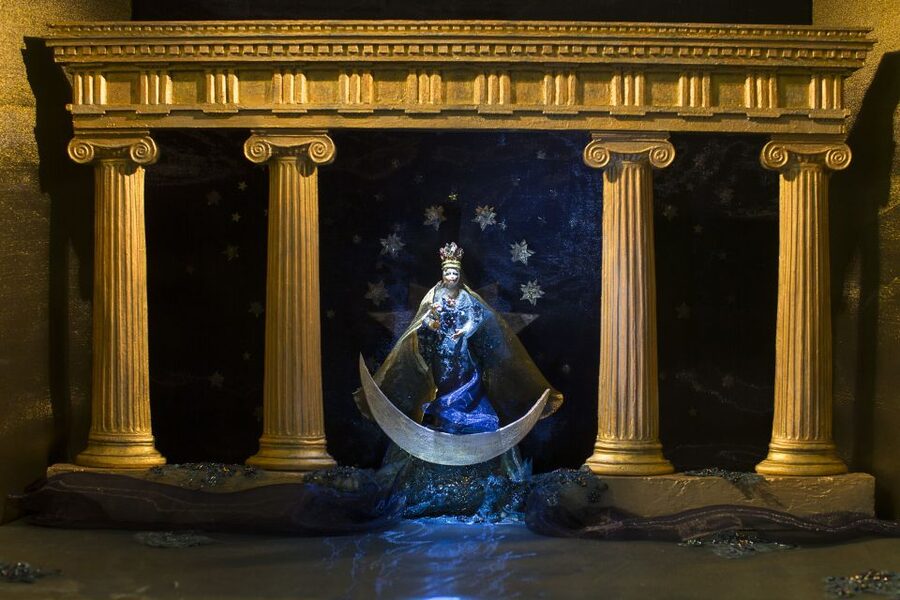
I would recommend this museum first to people who already enjoy Mozart, classical music, or historic homes. It is also a good starting point if you know the music but little about Mozart’s life in Vienna.
Families can make it work with the children’s audio guide, but younger children may not enjoy the amount of reading. Haus der Musik is the better addition for children who need more activity.
Casual visitors should come with realistic expectations. You will not find a large collection of original Mozart belongings, a furnished apartment at every turn, or a hands-on music laboratory. You will find a compact, thoughtful museum built around a powerful address.
The museum is wheelchair accessible. Bring a student card if you plan to use one, and carry a passport or other ID because these are listed among the items to bring. Transfers, food, and drinks are not included, so plan this as a self-contained museum stop in your Vienna day.
Should you book it?
Book Mozarthaus Vienna if the idea of standing in Mozart’s only preserved Vienna apartment appeals to you, especially if you want to understand the place where he composed Figaro and produced much of his important Vienna work.
Skip it if you mainly want instruments, lavish period rooms, or a highly interactive attraction. In that case, Haus der Musik may be a better match, or you can combine both for a more varied day.
For most music lovers, the $18 ticket is a sensible Vienna stop. Bring headphones, pace yourself through the text, and remember that the real attraction is the connection between the rooms, Mozart’s work, and the city around him.
FAQ
What does the Mozarthaus Vienna ticket include?
It includes admission to Mozarthaus Vienna, the audio guide, cloakroom access, and the special exhibition. Admission to Haus der Musik is included only if you select the combo option.
How long is the ticket valid?
The ticket is valid for one day. You should check availability for the available starting times.
Is the audio guide included?
Yes. Adult audio is available in 13 languages, and a children’s audio guide is available in 8 languages.
Which languages are available for the audio guide?
The listed languages are English, German, Slovak, Spanish, French, Hungarian, Italian, Polish, Russian, Chinese, Czech, Japanese, and Korean.
Can children use the audio guide?
Yes. A children’s audio guide is available in eight languages. The museum also contains a substantial amount of reading, which may suit older children better.
Can I take photographs inside?
No. Photography and video recording are not allowed inside the museum.
Is Mozarthaus Vienna wheelchair accessible?
Yes, the experience is listed as wheelchair accessible.
Is Haus der Musik included?
Haus der Musik admission is included only when you choose the combo ticket. The regular Mozarthaus ticket does not include it.
Can I cancel the booking?
Yes. You can cancel up to 24 hours in advance for a full refund. Reserve now and pay later is also available.
Just reviewed in Vienna
- World War II History Vienna Old Town Private Walking Tour★ 4.8 · 9 reviews
- Vienna: Wine Tasting E-Bike Tour★ 4.9 · 46 reviews
- Vienna: Winery and Wine Tasting Tour with a Wine Expert★ 5.0 · 5 reviews
- Vienna: Unforgettable Private City Tour★ 5.0 · 7 reviews
- Vienna Urban Art Tour: Explore a different side of Vienna!★ 3.8 · 14 reviews
- Vienna: Concert by the Vienna Baroque Orchestra★ 4.6 · 56 reviews
- Vienna: Sunday Brunch Danube Cruise & Live Music★ 4.2 · 42 reviews
- Vienna Supreme Orchestra at Palais Niederösterreich★ 4.8 · 10 reviews
Vienna Mozart Concerts and Tours, compared.
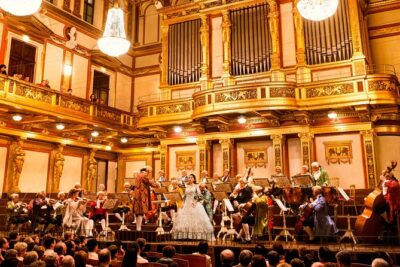
Vienna Mozart Concert in Historical Costumes at the Musikverein
Read our review →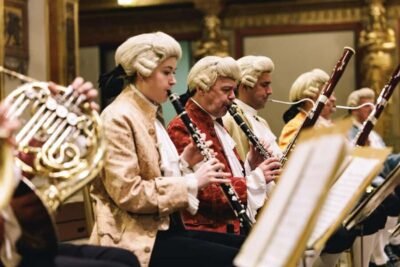
Browse the lists this tour appears in