
Reviewed · VIENNA MOZART CONCERTS AND TOURS
Vienna: Mythos Mozart Experience
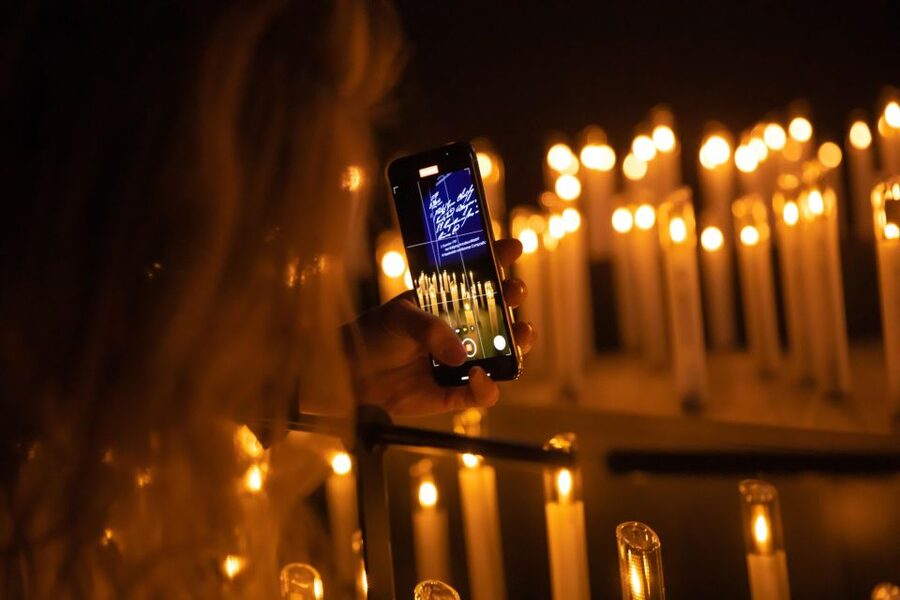
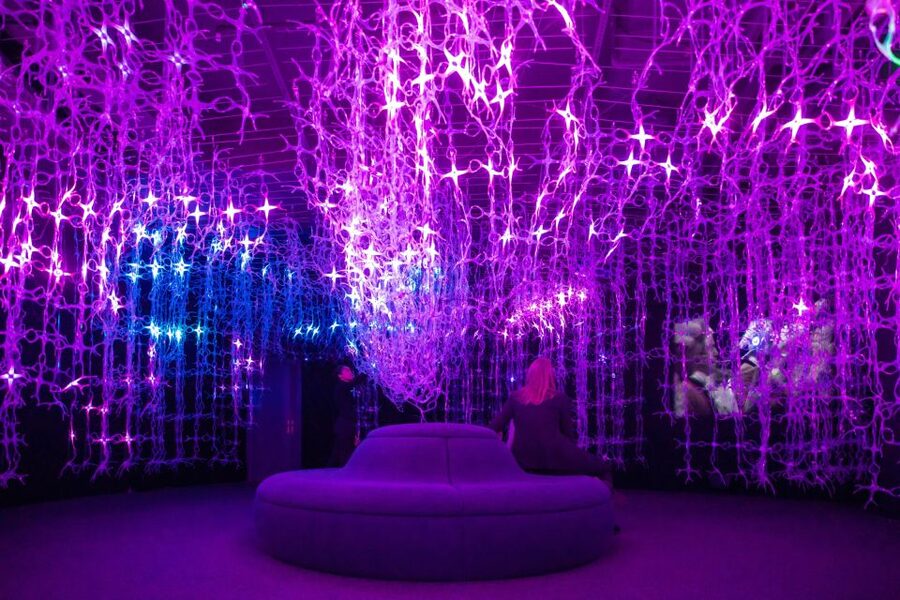
Mozart’s last Vienna home has been turned into a one-hour sound-and-light journey, and the strongest moments are surprisingly physical: 1,500 candles flicker around you in the REQUIEM room, while a later gallery sends you over 18th-century rooftops in a 360-degree view of the city. I like the way music, projection, and architecture work together rather than relying on glass cases and long labels. I also like the playful Little Night Music room, where you can try instruments from around the world.
The main thing to know is that this is an artistic presentation, not a traditional Mozart museum. You will hear and see plenty, but you may not learn as much about his dates, works, and personal life as you would from a guided historical tour. The final room’s AI-based material also feels modern and speculative, which some people enjoy and others may find less connected to Mozart.
Key points to know before you go
- Mozart’s final Vienna address: The presentation takes place in the building where Mozart spent the last year of his life and wrote parts of The Magic Flute and The Requiem.
- A candlelit opening: The REQUIEM room uses 1,500 candles and music to create the most solemn part of the visit.
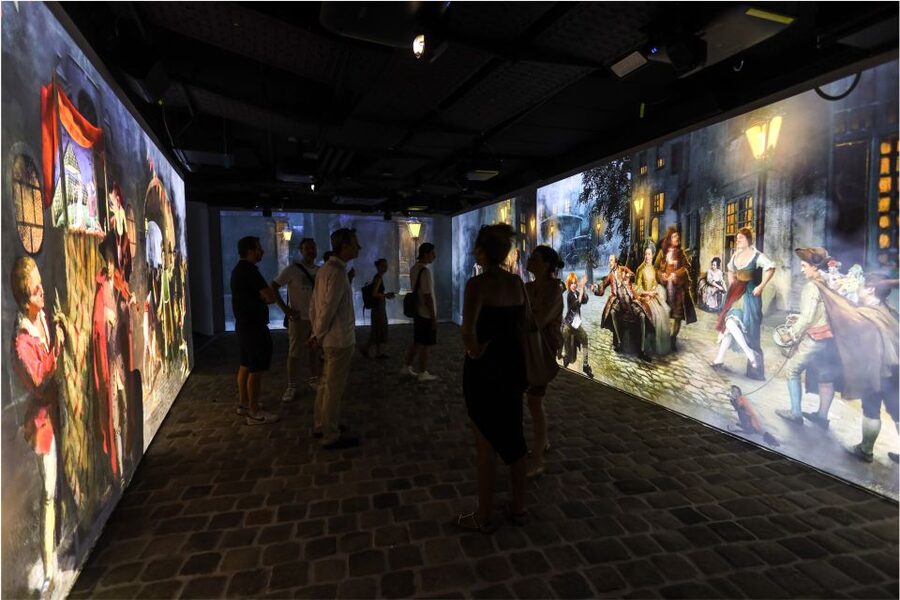
- Vienna from above: The VIENNA 1791 room offers 360-degree views of the city as it looked in Mozart’s time.
- Hands-on music making: The Little Night Music room lets you interact with instruments from different parts of the world.
- A useful one-hour stop: At $27 per person, the visit works well as a focused rainy-day activity or a short cultural addition to a busy Vienna schedule.
- Rooftop finish: The Sky and Roofgarden looks toward the First District, Karlskirche, the Giant Ferris Wheel, and St. Stephen’s Cathedral.
What Mythos Mozart is really offering
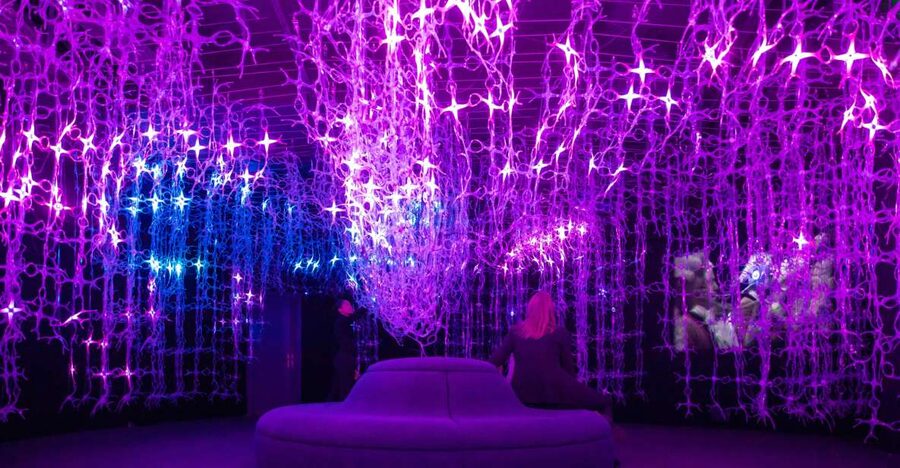
Mythos Mozart is best understood as a staged audio-visual portrait of Mozart, not as a conventional museum. You move through a series of rooms, usually spending about 10 minutes in each, with music, images, lights, and interactive elements carrying the story.
That format matters. You do not need to read music or arrive with a detailed knowledge of Mozart’s operas. The presentation introduces his world through mood and sound first, then adds historical and visual details. I would compare it to a short gallery show crossed with a concert and a digital theater production.
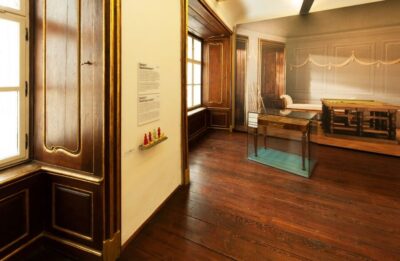
The setting gives the whole visit extra weight. Mozart lived in this building during the final year of his life, in 1791. He worked here on The Magic Flute and The Requiem, and he died here. The exhibit uses that fact as its anchor, though it does not turn every room into a strict reconstruction of his daily life.
You should plan for a self-guided visit with an English host or greeter available at the welcome desk. The presentation itself is designed to carry you from room to room. One useful improvement would be clearer explanation at the start, since the visit does not function like a standard guided tour with a named guide speaking throughout.
More Mozart concerts and walks:
- Vienna: Mozart Concert at the Golden Hall
★ 4.6 · 3,986 reviews - Vienna: Classical Concert at Mozart’s First House
2,423 reviews - Vienna: Mozart and Strauss Concert at Schönbrunn
★ 4.5 · 2,364 reviews
Starting with 1,500 candles in the REQUIEM room
The first major room is REQUIEM: MOZART’S DEATH. It is filled with 1,500 candles, arranged as part of a lighting design by British-German designer Moritz Waldemeyer.
This is the most atmospheric section of the visit, but it is also the most serious. The candlelight, darkness, and Requiem create a sense of ceremony. If you prefer to begin with lighter material, the opening may feel intense. Still, it makes clear from the start that this visit is concerned with both Mozart’s genius and the shortness of his life.
The room does not ask you to sit through a lecture. Instead, the setting gives you time to listen and look. The effect works best when you slow down and let the music fill the space. It is one of the few parts where the building’s connection to Mozart feels especially close.
I would not bring a young child expecting a noisy, hands-on attraction from beginning to end. Children can enjoy the visual effects and later interactive rooms, but the Requiem section is quiet and solemn. For adults, it provides a strong emotional opening.
Seeing Vienna in 1791 from rooftops and a balloon
Next comes VIENNA 1791: MOZART’S CITY. Here the presentation widens from one composer to the city around him.
You can stroll through busy historical scenes, climb over rooftops in a balloon, and look toward the building where Mozart died. The 360-degree panoramic views are the point of the room. Rather than studying a single picture, you are placed inside a moving view of 18th-century Vienna.
This section helps explain Mozart as a city musician. His work was shaped by courts, theaters, churches, audiences, and the streets around him. The room does not replace a proper history lesson, but it gives you a visual sense of the urban setting behind the name Mozart.
The digital format is especially useful here. A printed map can show where places sit, but moving through a projected city makes the scale easier to grasp. I like that the presentation asks you to look around instead of keeping your eyes fixed on one screen.
If you want detailed information about Vienna’s politics, Mozart’s patrons, or the exact sequence of his travels, you may find this room too brief. It gives atmosphere and orientation more than a full biography.
Playing instruments in the Little Night Music room
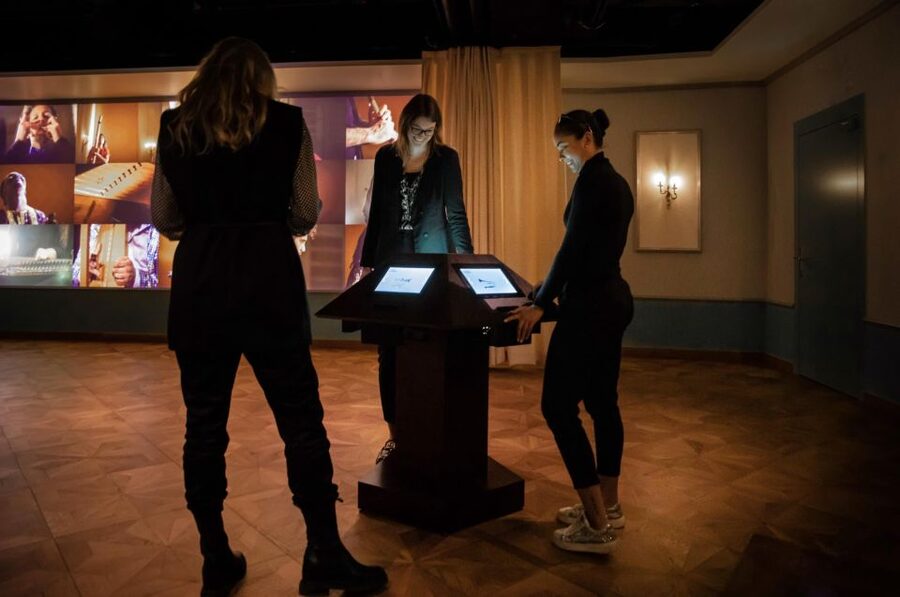
The Little Night Music room changes the pace. This is the most playful stop, with instruments from around the world that you can interact with.
You do not need to be a musician. The appeal is in trying something unfamiliar and hearing how sound is made. After the darker Requiem room and the grand city projections, this hands-on section gives the visit a welcome lift.
It also helps younger visitors connect with Mozart without turning him into a distant historical figure. Children can take part, and adults who usually hurry through museum displays may find themselves lingering here. The activity is simple, but it makes the music feel less like something that belongs only on a concert stage.
The room can become less comfortable if several groups arrive at once, since interactive objects invite people to gather around them. The visit is still short enough that you will not spend too long waiting, but your enjoyment may depend on how busy the room is during your time slot.
A different sort of day out in Vienna:
- Vienna: Vivaldi’s Four Seasons Concert in Karlskirche
★ 4.7 · 14,951 reviews - Vienna: Skip-the-cashier-desk-line Giant Ferris Wheel Ride
★ 4.5 · 7,859 reviews - Vienna: Schönbrunn Palace & Gardens Skip-the-Line Tour
★ 4.7 · 7,739 reviews - Vienna: Light of Creation Votive Church Immersive Light Show
★ 4.8 · 6,779 reviews
From historical Mozart to modern AI
The final part brings the presentation into the present with contemporary digital effects and AI-generated material. This is where the show asks you to imagine what Mozart might have done with 21st-century tools.
Some people will find this a fitting finish. Mozart was known for experimentation, and the combination of art, sound, and technology gives the ending energy. The modern treatment also reinforces the idea that his music continues to be reworked for new audiences.
Others may prefer a more firmly historical ending. The AI section is not the place to look for new biographical facts, and it can feel less connected to the rooms about Mozart’s final year and 18th-century Vienna.
I see it as a creative afterword rather than a historical exhibit. If you keep that expectation, it makes sense. If you want the whole visit to remain tied to Mozart’s life, this will be the least satisfying section.
Why the music works even if you are not a Mozart expert
The strongest feature of Mythos Mozart is its low barrier to entry. You can appreciate the sound without knowing the difference between an opera, a concerto, and a requiem. The visual material provides a route into the music for people who might not choose a classical concert on their own.
The presentation also avoids making you work through long blocks of text. That is helpful after a day of churches, palaces, and formal museums. You can simply listen, watch, and notice how the mood changes from room to room.
At the same time, the format has limits. You will not leave with a detailed catalogue of Mozart’s compositions or a full account of his relationships, debts, patrons, and travels. The focus is sensory and emotional. For a deeper historical account, pair this with another Mozart site or a concert.
I particularly like the contrast between the solemn Requiem material, the moving city scenes, and the playful instruments. That changing rhythm keeps the one-hour visit from feeling like one long projection.
Is $27 good value for one hour?
The listed price is $27 per person. That is not a bargain-basement museum ticket, but it is reasonable if you want a polished, weather-proof cultural activity in central Vienna and you enjoy music-led visual art.
The value depends on what you want. You are paying for a carefully produced presentation in an important Mozart location, with several distinct rooms and access to the Sky and Roofgarden. You are not paying for a long guided tour or a large collection of original objects.
I would call it good value for:
- A first visit to Vienna when you want an easy introduction to Mozart
- Families looking for something more active than a standard museum
- Classical music fans who want to hear familiar works in a new setting
- A rainy afternoon or an evening activity before dinner
- Anyone with only an hour to spare near central Vienna
I would think twice if your main goal is detailed scholarship. At $27, a traditional museum ticket with extensive written interpretation may give you more factual material. Mythos Mozart gives you a more polished visual event.
The Sky and Roofgarden helps the price feel fairer, especially if you take time there rather than treating it as a quick exit point. The views include the First District, Karlskirche, the Giant Ferris Wheel, and St. Stephen’s Cathedral. You can also buy food and drinks at the Sky Café and Restaurant, though those purchases are separate.
Timing, arrival, and practical details
The visit lasts about one hour. Book a time slot in advance and arrive at the Mythos Mozart Welcome Desk up to 15 minutes before your start time. Spontaneous entry can be possible when space remains, but I would not rely on it during a busy period.
The experience is wheelchair accessible. Free lockers and toilets are available in the building, which makes this a convenient stop during a long day in the city. Food and drinks are not included, but the rooftop café provides an easy option afterward.
Bring a passport or other ID card, and bring a student card if you are using one for your booking. Pets are not allowed.
The host or greeter speaks English. Do not expect a continuous English-speaking guide leading every room. If you want more explanation, ask at the welcome desk before you begin. A few visitors have found the introductory guidance too brief, and subtitles or fuller commentary would help people who want more context.
You can cancel up to 24 hours before the visit for a full refund, and the reserve-now, pay-later option can help if your Vienna schedule is still shifting.
Who should book Mythos Mozart?
I would recommend it most strongly to people who want to feel Mozart’s music rather than study every detail of his biography. It suits couples, families with older children, first-time Vienna visitors, and anyone who wants a modern cultural stop without committing to a full concert.
It is also a smart choice if the weather turns wet. Several parts of the presentation are calm and atmospheric, while the instrument room and city projections keep the pace from becoming heavy.
Classical music fans should enjoy the sound and the connection to Mozart’s final home, though they may want more historical depth. The exhibit is not a replacement for hearing Mozart performed live or visiting a traditional museum.
The rooftop views make the visit useful even if your interest in Mozart is limited. You get a short city orientation, an indoor activity, and a chance to look across central Vienna from above.
Should you book it?
Book Mythos Mozart if you want a one-hour, visually powerful introduction to Mozart, especially if you are traveling with children or need a good indoor activity. The candlelit Requiem room, 360-degree Vienna scenes, hands-on instruments, and rooftop finish give the visit a clear variety.
Skip it if you want a detailed biographical museum, original manuscripts, or a scholarly guided tour. For most other visitors, $27 is a fair price for a polished presentation that makes Mozart approachable without requiring musical training.
FAQ
How long does the Mythos Mozart visit last?
The stated duration is one hour. Each room generally allows about 10 minutes for its music, images, and interactive material.
Where does Mythos Mozart take place?
It takes place in the building where Mozart spent the final year of his life and where he died in 1791. He also composed The Magic Flute and The Requiem there.
What is included in the ticket?
The ticket includes entry to the Mythos Mozart immersive multimedia experience. Hotel transportation, food, and drinks are not included.
Is the experience available in English?
The host or greeter speaks English. The supplied information identifies English as the available language.
Do I need to book a time slot?
Yes. Visitors should book a time slot in advance and arrive at the Welcome Desk up to 15 minutes before the start time. Walk-in visits may be possible if occupancy allows.
Is Mythos Mozart wheelchair accessible?
Yes, the experience is wheelchair accessible.
Can I bring a pet?
No. Pets are not allowed.
Can I cancel my booking?
Yes. You can cancel up to 24 hours in advance for a full refund. A reserve-now, pay-later option is also available.
Just reviewed in Vienna
- World War II History Vienna Old Town Private Walking Tour★ 4.8 · 9 reviews
- Vienna: Wine Tasting E-Bike Tour★ 4.9 · 46 reviews
- Vienna: Winery and Wine Tasting Tour with a Wine Expert★ 5.0 · 5 reviews
- Vienna: Concert by the Vienna Baroque Orchestra★ 4.6 · 56 reviews
- Vienna: Unforgettable Private City Tour★ 5.0 · 7 reviews
- Vienna Urban Art Tour: Explore a different side of Vienna!★ 3.8 · 14 reviews
- Vienna: Sunday Brunch Danube Cruise & Live Music★ 4.2 · 42 reviews
- Vienna Supreme Orchestra at Palais Niederösterreich★ 4.8 · 10 reviews
Vienna Mozart Concerts and Tours, compared.
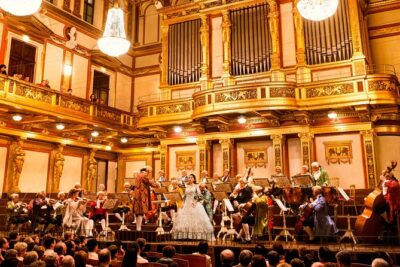
Vienna Mozart Concert in Historical Costumes at the Musikverein
Read our review →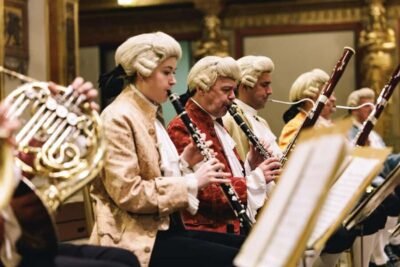
Browse the lists this tour appears in