
Reviewed · VIENNA CLASSICAL CONCERTS
Vienna: Mozart Concert at the Vienna State Opera
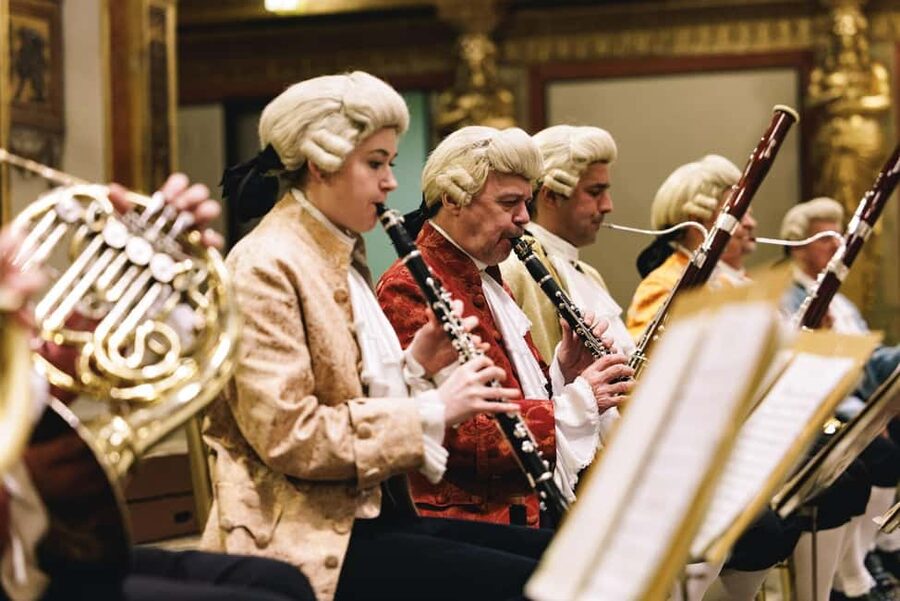
Mozart, Strauss, opera singers, period costumes, and one of Europe’s great opera houses make this a very easy way to enjoy a festive Viennese evening. I like the mix of familiar music and live voices, and I especially like that the 30-piece orchestra includes musicians connected with the Vienna Philharmonic and Vienna Symphony. You get a polished classical concert without needing to know every opera in advance.
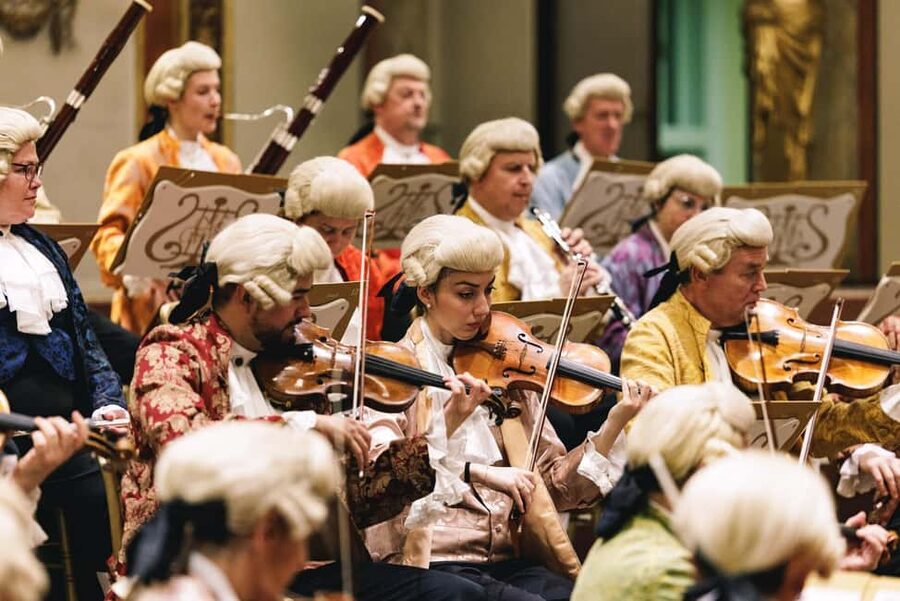
I also like the spirited presentation, with musicians in Baroque costumes, tall wigs, international soloists, and an energetic conductor. The main caution is seating: lower-priced categories can leave you with a limited view, and some seats may show only part of the stage or orchestra. This is as much a theatrical night out as a serious concert, so check your seating option carefully.
Key points to know before booking
- Mozart leads the program: Expect overtures, arias, duets, instrumental concertos, serenades, and divertimentos.
- Strauss closes the evening: The Blue Danube and Radetzky March provide a familiar, festive finish.
- The performance lasts about two hours: It is a manageable evening activity, especially for first-time opera visitors.
- Seat category matters: Some lower-priced seats have restricted views, including seats where you cannot see the singers.
- Formal dress is requested: The stated dress code is formal or black tie, though it may not be strictly followed.
- The ticket covers admission only: Drinks, the printed program, and cloakroom service cost extra.
What the evening feels like inside the Vienna State Opera
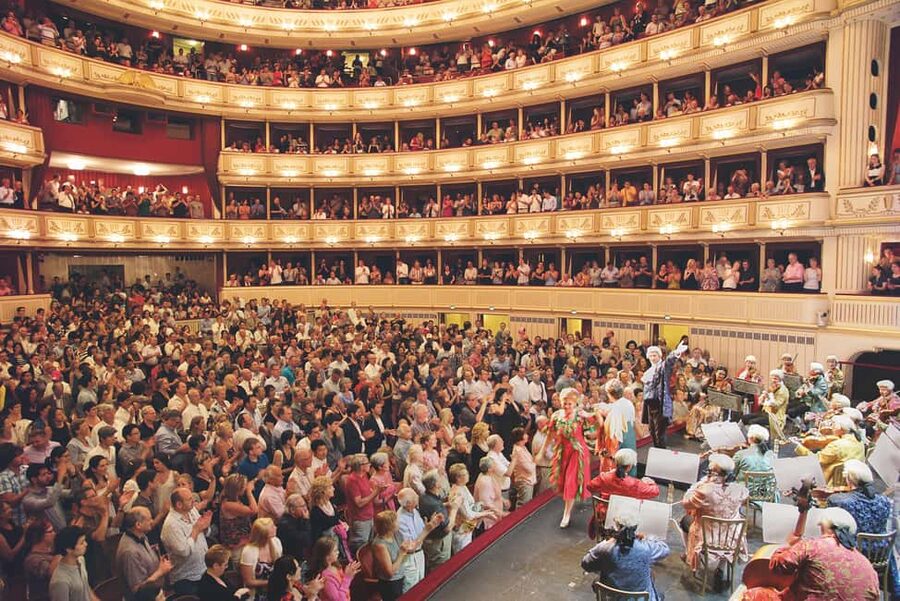
The setting gives this concert much of its appeal. You are not simply listening to Mozart in a plain hall. You enter the Vienna State Opera, known locally as the Staatsoper, and spend the evening in an ornate theater setting that fits the music.
The building’s public areas can make a strong first impression. One visitor described the main lobby as especially grand, while finding the auditorium itself less spectacular by comparison. That is useful context: the opera house is beautiful, but the exact impression depends on where you sit and which parts of the building you see.
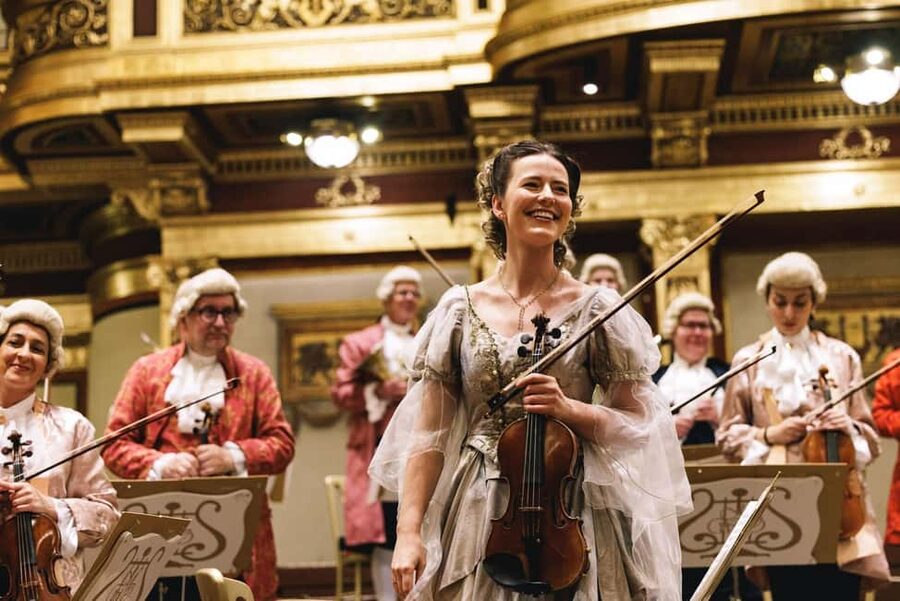
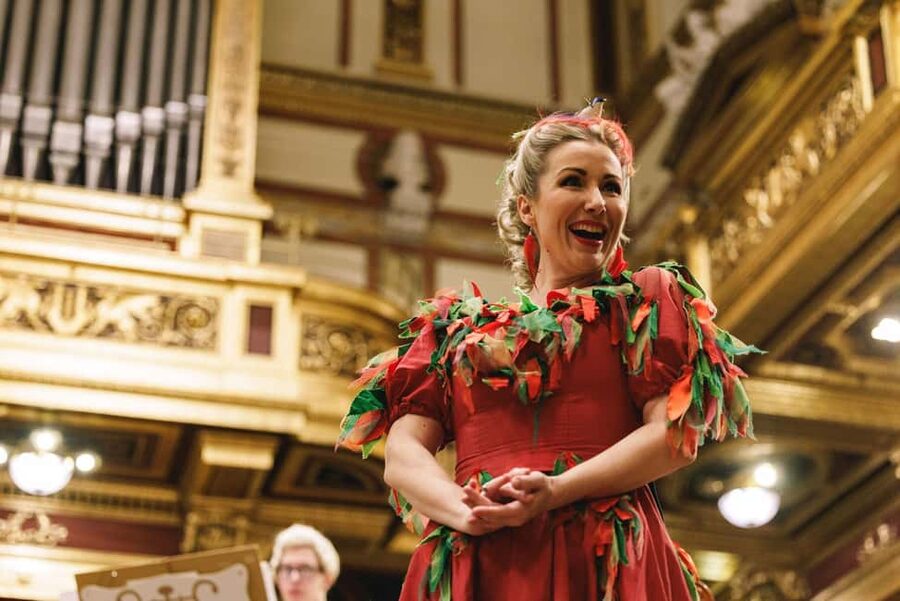
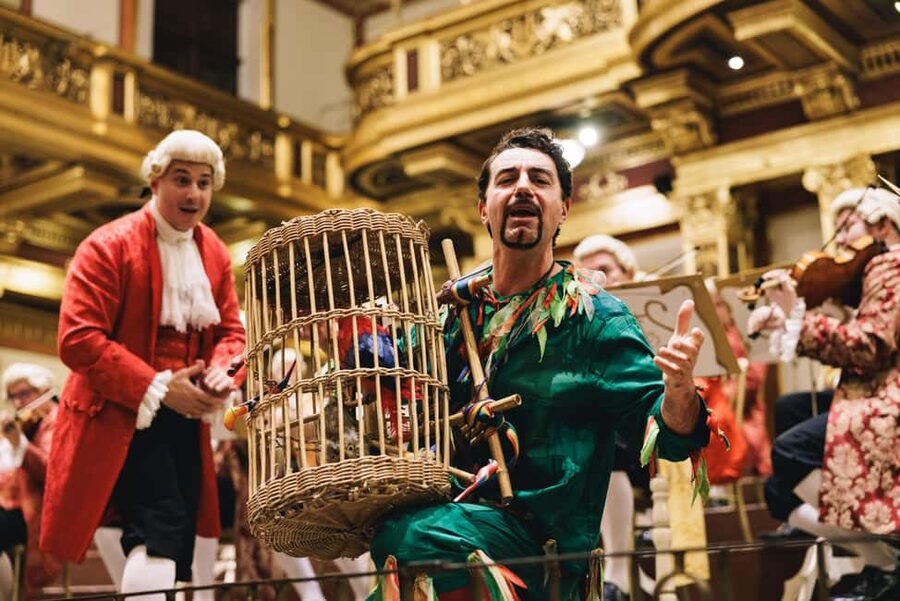
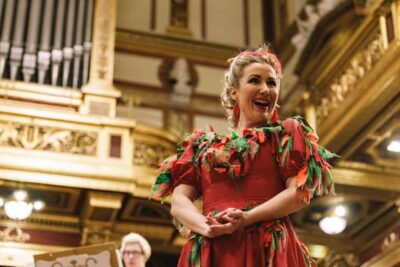
The musicians add a touch of theater. Their Baroque-style clothing and powdered wigs create a playful picture of 18th-century Vienna. The costumes are not meant to suggest that you have stepped into Mozart’s own orchestra, but they do make the concert feel more festive and approachable.
That tone suits people who want a classic Vienna night without committing to a full-length opera. You can enjoy well-known melodies, watch the musicians work, and hear trained singers without having to follow a long plot in German or Italian.
More classical concerts in Vienna:
- Vienna: Vivaldi’s Four Seasons Concert in Karlskirche
★ 4.7 · 14,951 reviews - Vienna: Classical Concert in the World-Famous Musikverein
★ 4.6 · 6,673 reviews - Vienna: Mozart Concert at the Golden Hall
★ 4.6 · 3,986 reviews
The Mozart program: familiar music with variety
The concert draws from several parts of Mozart’s work. You may hear overtures from his best-known operas, arias and duets sung by international opera performers, and selections from symphonies, instrumental concertos, serenades, and divertimentos.
This variety matters. A full evening of only operatic arias could feel narrow if you are new to classical music. Here, the program moves between orchestral pieces and vocal numbers, so the sound keeps changing.
The overtures offer a lively opening to the operatic selections. An overture gives you the drama of an opera without requiring you to know the story. The arias then put the focus on the singers, while duets create a more conversational moment between the voices.
You should not approach this as a complete Mozart opera. You will not follow one story from beginning to end. Instead, the evening works as a collection of highlights, similar to a musical introduction to Mozart’s stage and concert works.
That format suits a first visit. If you already know Mozart well, you may find the selection familiar rather than surprising. Still, hearing these pieces live, with a full orchestra and opera singers, gives them a different force than listening through headphones.
The singers, soloists, and conductor
The program features international opera singers and soloists, including performers associated with Vienna’s State Opera and Folk Opera. Their role gives the concert a lift beyond a standard orchestral performance.
The singers also help keep the evening accessible. Even if you do not consider yourself an opera expert, you can respond to the contrast between the orchestra and the human voice. The program is built around well-known music rather than obscure material, so you can enjoy the sound without preparing beforehand.
The conductor is another important part of the evening. The performance style is described as energetic and engaging, rather than stiff or overly formal. That approach works well with this format, especially when the program shifts quickly between orchestral pieces, arias, and duets.
You may notice that the audience is mixed. Some people arrive dressed for a special night, while others treat the concert as a casual sightseeing activity. That can affect the atmosphere. A few comments describe informal clothing and occasional noise as distractions. If you want a very quiet, strictly traditional concert setting, this may feel more relaxed than expected.
Strauss provides the big finish
Mozart supplies most of the program, but Johann Strauss gives the evening its most instantly recognizable ending. The Blue Danube and Radetzky March are included as closing selections.
The Blue Danube brings the graceful waltz sound associated with Vienna. It is a natural choice for a concert aimed at visitors who want a strong connection to the city’s musical identity.
The Radetzky March provides a more upbeat final note. The combination helps keep the concert from ending on a solemn or weighty piece. You leave with the sound of Vienna’s waltz tradition still in your ears.
This closing section is worth keeping in mind if you glance at the program and do not see Strauss listed early on. The Strauss selections may come near the end, so do not assume they have been left out.
More Mozart concerts and walks:
- Vienna: Classical Concert at Mozart’s First House
2,423 reviews - Vienna: Mozart and Strauss Concert at Schönbrunn
★ 4.5 · 2,364 reviews - Vienna: Tickets for Mozarthaus Vienna with Audio Guide
★ 4.2 · 2,344 reviews - Vienna: Mythos Mozart Experience
★ 4.5 · 895 reviews
Seating is the biggest practical issue
The most important decision is not the music. It is the seat category.
Some people booking a lower category have received excellent seats, including places only a few rows from the front. Others have been placed in the back row of a middle tier or at the side, with only a partial view of the orchestra and no clear view of the singers.
That difference can change the experience. If you mainly care about hearing the music, a restricted-view seat may still work. If you want to watch the conductor, singers, costumes, and musicians, a limited view can be frustrating.
One especially important point is that two seats at the same price may not offer the same sightline. A side seat can be more difficult than a central seat in the same category. Exact seat location is not always clear when you buy online, so you should treat the category as a guide rather than a guarantee of a perfect view.
If seeing the stage matters to you, consider paying for a better category when the difference is reasonable. A more expensive seat may be better value than arriving at the theater and feeling forced to upgrade. One account described upgrading during the evening simply to see the stage properly.
At the same time, lower-category seats can work well for a music-first evening. One person with Category B seating reported a close, satisfying position, while another person in a similar price range had a poor view. The lesson is simple: seat placement appears less predictable than the music quality.
Dress code and the real atmosphere
The stated dress code is formal or black tie. That sets the tone the organizers want, but it is not always enforced strictly.
You may see people in formal clothing alongside people in shirts, shorts, or ordinary sightseeing clothes. This creates a more relaxed atmosphere than the official wording suggests. It also means you should not feel unable to attend because you lack full evening wear, though dressing neatly will help you fit the setting.
If you have the chance, I would dress for a special night. A jacket, smart trousers, a dress, or another polished outfit feels appropriate in the opera house and adds to the occasion. You do not need to treat it as a rigid rule, but dressing well makes the experience feel more connected to Vienna’s concert tradition.
The period costumes and wigs add color, but they also make the event somewhat theatrical. This is not a bare-bones chamber concert. It is designed to give you a recognizable picture of classical Vienna, complete with visual touches and popular selections.
Comfort, timing, and small inconveniences
The concert lasts about two hours. That is long enough for a satisfying evening but short enough to fit around dinner, sightseeing, or an early morning departure.
The interior may feel warm. One person specifically found the theater too hot, so lightweight layers are sensible even if you dress formally. You can remove a jacket if needed, though the cloakroom is not included in the ticket.
Restroom capacity may also be limited during busy periods. One account described the lobby facilities as too small for the number of people present, while another suggested using restrooms on an upper floor to avoid the main lobby line. That tip may help, though conditions can vary by evening.
Your ticket includes entrance to the concert only. Drinks, the printed program, and cloakroom service are separate. If you want to read about each piece during the performance or check the evening’s details, budget for the program rather than assuming it is included.
The meeting point can vary by the option you book. Read the confirmation closely instead of assuming every ticket uses the same entrance or collection point.
Ticket exchange and arrival advice
You can exchange your ticket before the concert at the orchestra office on Kärntner Straße 51, third floor. The office is open daily from 10:00 a.m. to 5:00 p.m.
Doing this in advance may help you avoid the evening ticket line. It is particularly useful if you are already near Kärntner Straße during the day. The exchange is available on any day before the concert.
There has been some confusion about timing, so check the instructions attached to your specific booking. A note advising advance collection may not always match the actual collection window offered. If the location or time is unclear, allow extra time and confirm before heading to the opera house.
Do not leave arrival until the last minute if you want to look around, find your seat, and handle any ticket exchange. The theater’s public spaces are part of the experience, and rushing through them would be a shame.
Is $81 a fair price?
At $81 per person, this is not the cheapest way to hear classical music in Vienna. The value depends on what you are buying.
You are paying for a two-hour performance, a Vienna opera-house setting, a 30-musician orchestra, opera singers, soloists, a conductor, and a program built around famous Mozart and Strauss pieces. For someone seeking a polished, easy-to-book cultural evening, that package can make sense.
The price is harder to justify if you expect a full opera production, guaranteed front-facing seats, or a strict black-tie audience. This is a concert of highlights, not a complete staged opera, and the seating experience can vary by category.
I would consider it good value for a first-time classical music experience, especially if the theater setting matters to you. It is less compelling for a serious concert specialist who wants an exact program, guaranteed acoustics, or a fully staged production.
Who will enjoy this most?
This concert suits you if you want a clear introduction to Mozart and Strauss, enjoy famous melodies, or would like to visit the opera house without spending an entire evening at a full opera.
It is also a good fit for couples, families with older children, and anyone who prefers a self-contained cultural activity. Children aged 5 to 18 may qualify for discounted tickets, and students up to age 27 may qualify with an International Student Identity Card. Other student identification is not accepted.
You do not need specialist musical knowledge. The program is designed around recognizable works, and the combination of instruments, voices, costumes, and architecture gives you several ways to enjoy the evening.
You may want to choose something else if your priority is a guaranteed view of every singer, a quiet and highly formal audience, or an opera performed from start to finish. In that case, investigate the exact production and seat map before booking.
Should you book the Vienna Mozart Orchestra concert?
I would book it if you want a festive Vienna evening with famous Mozart works, live opera voices, and Strauss waltzes in an opera-house setting. The performance format is friendly to first-time concertgoers, and the two-hour length keeps the commitment manageable.
Choose your seat category with care, arrive early enough to handle the ticket details, and dress neatly even though the formal rule may be loosely applied. If you accept that this is a highlight concert rather than a complete opera, the $81 price can be worthwhile.
FAQ
How long does the concert last?
The concert lasts approximately two hours.
Where does the concert take place?
The experience takes place at the Vienna State Opera, also called the Staatsoper.
What music will be performed?
The program includes Mozart overtures, arias, duets, symphonies, instrumental concertos, serenades, and divertimentos. Strauss’ Blue Danube and Radetzky March are also included.
Who performs in the concert?
The performance features 30 musicians from the Vienna Mozart Orchestra, including members of the Vienna Philharmonic and Vienna Symphony, along with international opera singers and soloists.
Is there a dress code?
The stated dress code is formal or black tie. In practice, the dress standard may not be applied strictly.
Are drinks included in the ticket?
No. Drinks are not included.
Is the concert program included?
No. A printed program is not included in the ticket.
Is cloakroom service included?
No. Cloakroom service is not included.
Can children or students receive a discount?
Children aged 5 to 18 may receive a discount. Students up to age 27 qualify only with an International Student Identity Card, or ISIC. Other student IDs are not accepted.
Can I cancel my booking?
You can cancel up to 12 hours before the activity for a full refund.
Where can I exchange my ticket before the concert?
You can exchange it at the orchestra office at Kärntner Straße 51, third floor. The office is open daily from 10:00 a.m. to 5:00 p.m.
Just reviewed in Vienna
- World War II History Vienna Old Town Private Walking Tour★ 4.8 · 9 reviews
- Vienna: Wine Tasting E-Bike Tour★ 4.9 · 46 reviews
- Vienna: Winery and Wine Tasting Tour with a Wine Expert★ 5.0 · 5 reviews
- Vienna: Unforgettable Private City Tour★ 5.0 · 7 reviews
- Vienna Urban Art Tour: Explore a different side of Vienna!★ 3.8 · 14 reviews
- Vienna: Concert by the Vienna Baroque Orchestra★ 4.6 · 56 reviews
- Vienna: Swarovski DIY Workshop Experience★ 5.0 · 9 reviews
- Vienna: Sunday Brunch Danube Cruise & Live Music★ 4.2 · 42 reviews
Vienna Classical Concerts, compared.
Classical Concert in St. Anne’s Church (Annakirche)
Read our review →
Vienna Classical Concert at St. Peter’s Church
Read our review →Classical Concert in St. Anne’s Church (Annakirche)
Read our review →Browse the lists this tour appears in